Foundational Academicson Adaptive.
Master Foundational Academics with Adaptive Learning
Fundamentals
Algebra I
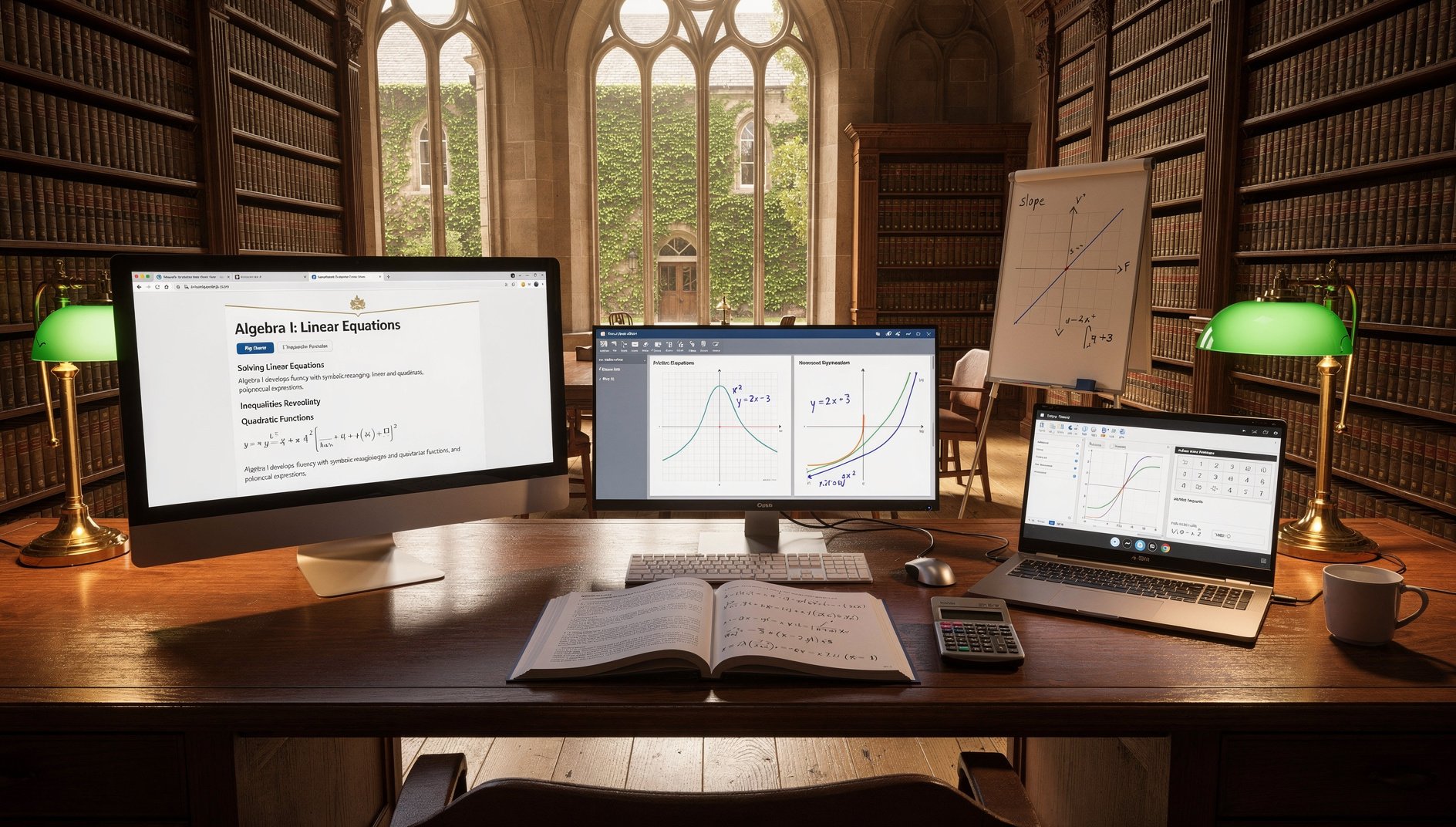
Algebra I is a foundational mathematics course covering the language and methods of symbolic reasoning, from solving linear equations and inequalities to analyzing quadratic functions and their graphs. Students develop fluency with polynomial arithmetic, factoring strategies, rational expressions, and radicals while building the problem-solving toolkit required for all subsequent mathematics.
Astronomy Fundamentals
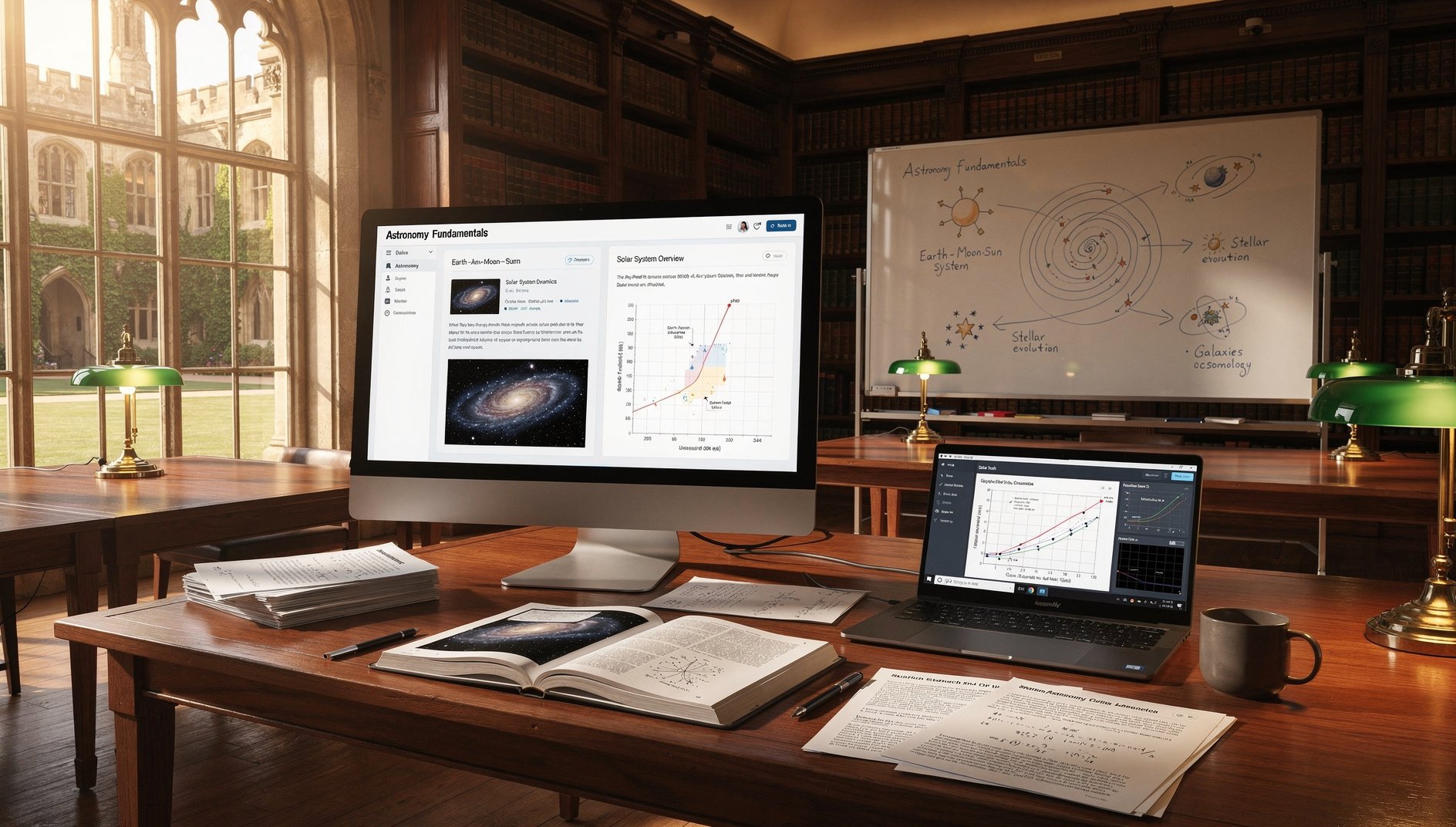
Astronomy Fundamentals covers the full sweep of modern astronomy from Earth-Moon-Sun dynamics and the solar system through stellar evolution, galaxies, cosmology, and the search for life beyond Earth. The course builds physical intuition for vast scales of space and time while grounding concepts in observational evidence and physical principles.
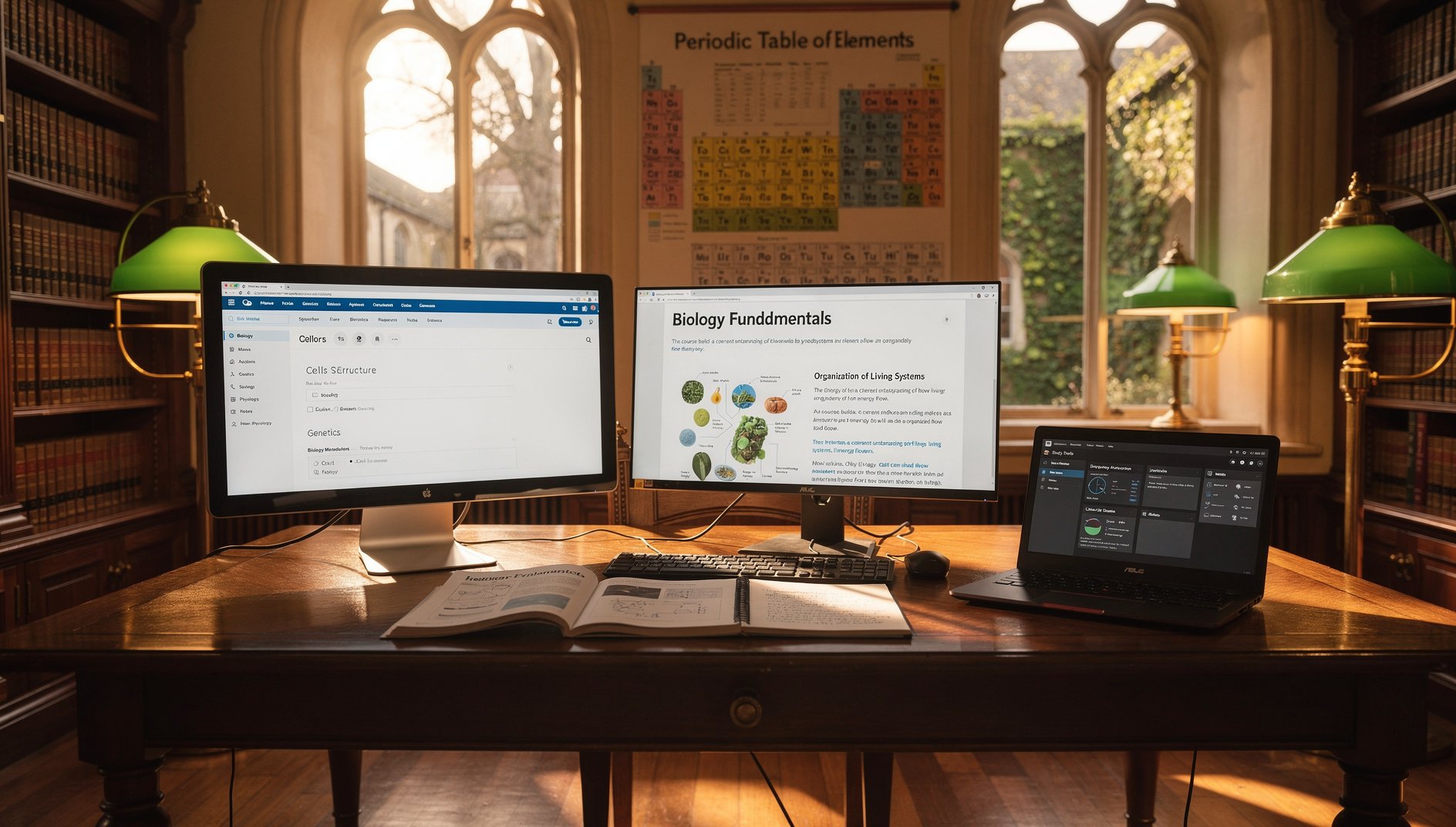
Biology Fundamentals
Biology Fundamentals covers the essential concepts of life science from the molecular level to entire ecosystems, including cell structure, genetics, evolution, and human physiology. The course builds a coherent understanding of how living systems are organized, how energy flows through them, and how they maintain stability over time.

Calculus I
Calculus I covers single-variable differential and integral calculus from limits and continuity through derivatives and their applications (optimization, related rates, curve sketching) to the Fundamental Theorem of Calculus, u-substitution, area between curves, volumes of revolution, and separable differential equations.

CHEM1B TTU K12
Composed course package for TTU K-12 CHEM 1B (Chemistry I, Semester B): chemical reactions, stoichiometry, gas laws, solutions, acids & bases, thermochemistry, and nuclear chemistry, filtered from the Chemistry Fundamentals corpus with syllabus-emphasis weighting.
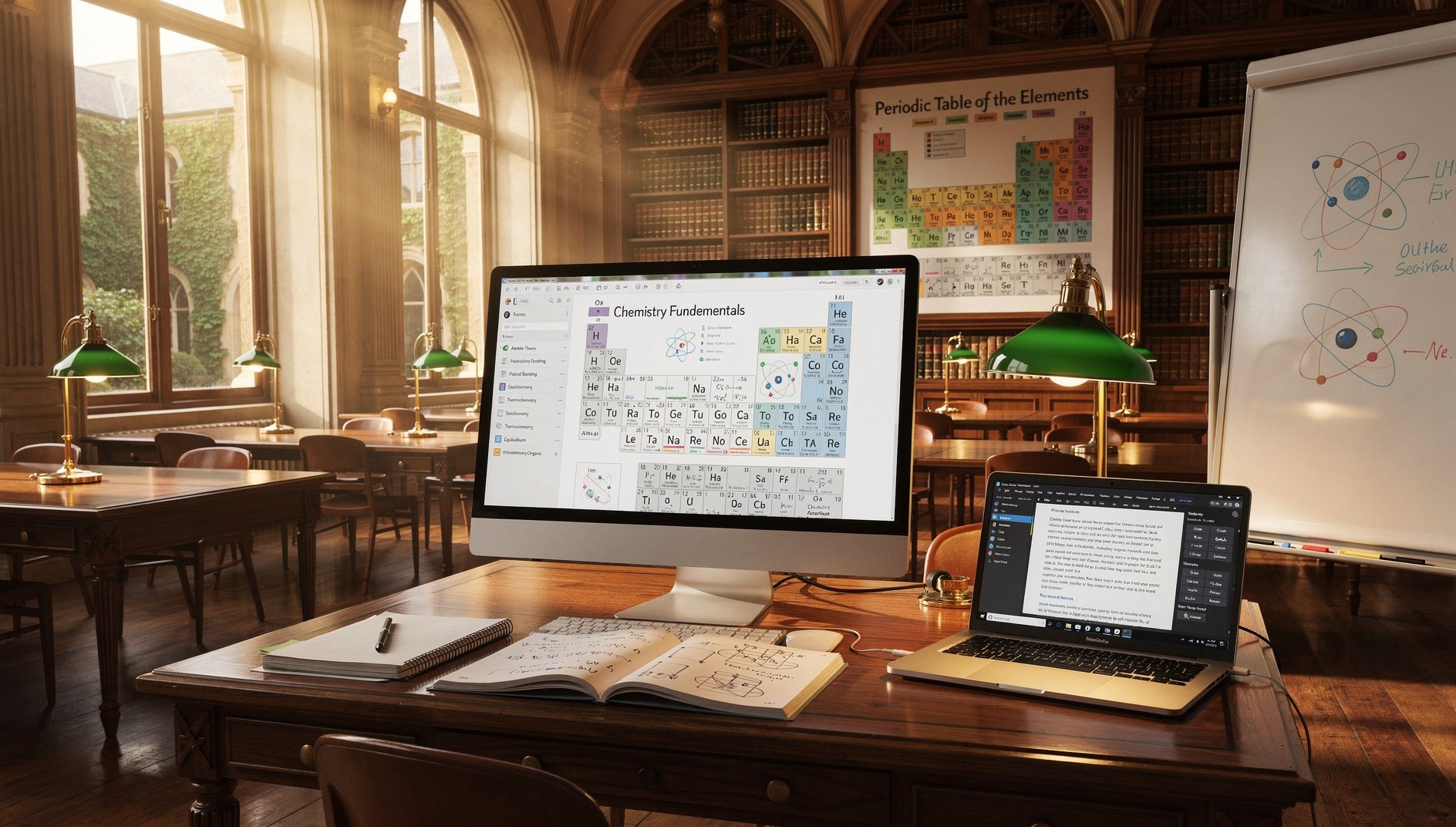
Chemistry Fundamentals
Chemistry Fundamentals covers the essential principles of matter and chemical change from atomic theory and periodic trends through chemical bonding, stoichiometry, thermochemistry, equilibrium, and introductory organic chemistry. The course provides a rigorous conceptual and quantitative foundation that connects macroscopic observations to atomic-level explanations.

Life Science
Life Science covers the foundational biology concepts for grades 6-7: cell theory, cell structures, living organism characteristics, classification, photosynthesis and respiration, cell division, Mendelian genetics, ecosystems and food webs, evolution by natural selection, and a survey of human body systems.
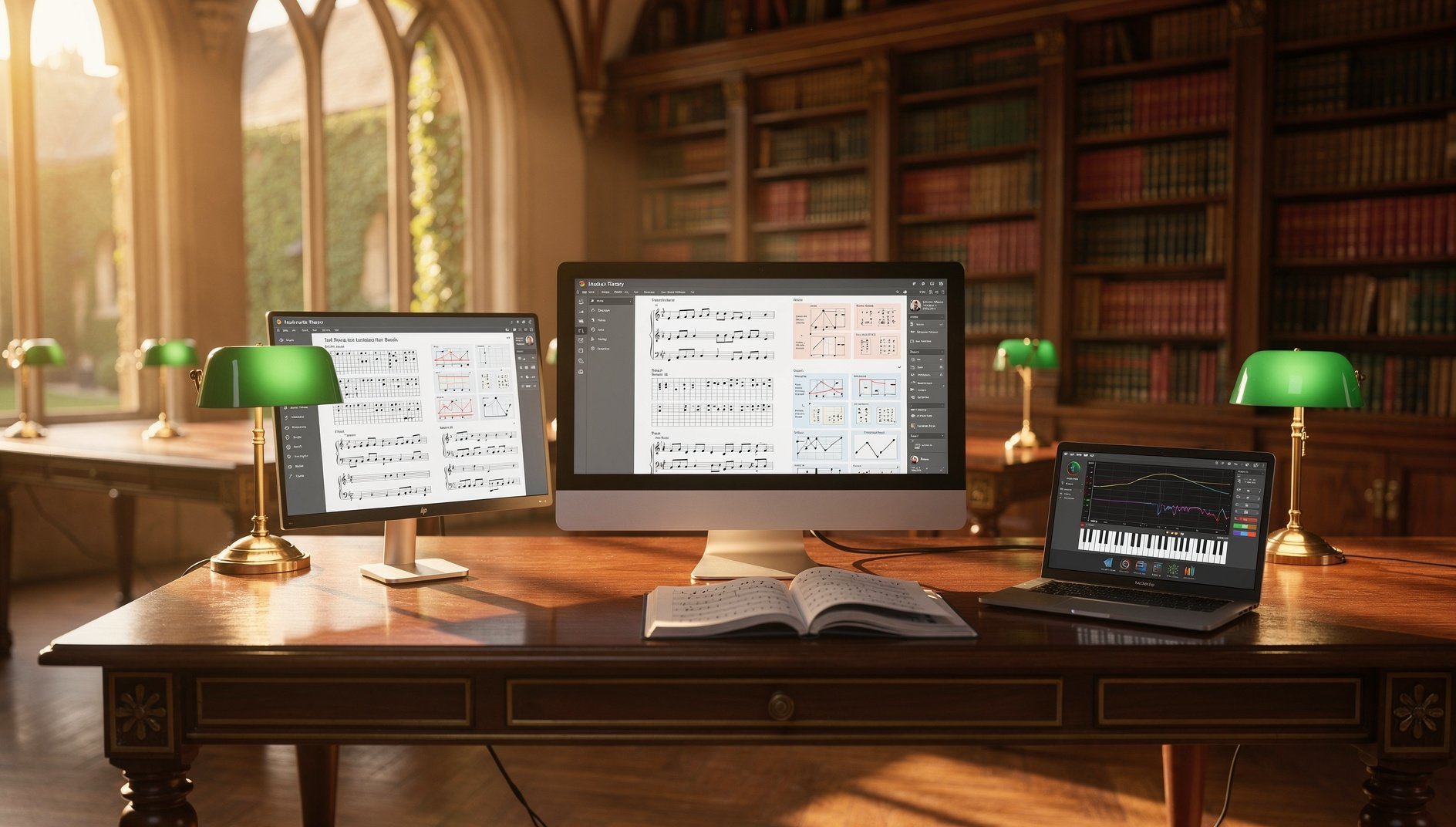
Music Theory
Music Theory covers the complete foundational toolkit of Western music theory from staff notation and rhythm through scales, intervals, chords, progressions, voice leading, counterpoint, form, and orchestration — building both theoretical understanding and practical ear training.
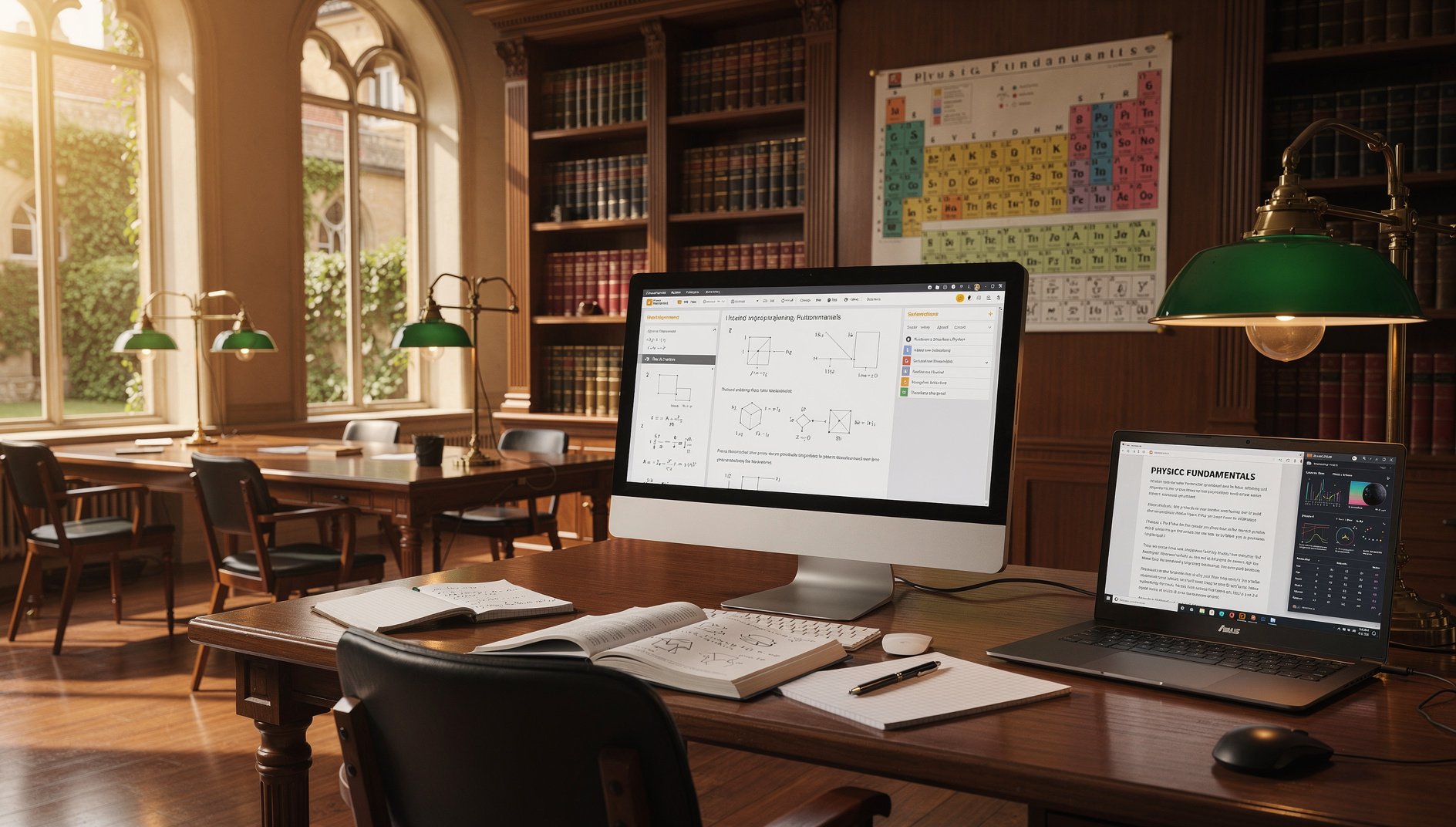
Physics Fundamentals
Physics Fundamentals covers the core principles of classical and modern physics from kinematics and Newton's laws through thermodynamics, electromagnetism, and optics. The course develops problem-solving skills using algebra-based methods and builds physical intuition through conceptual analysis and graphical interpretation.
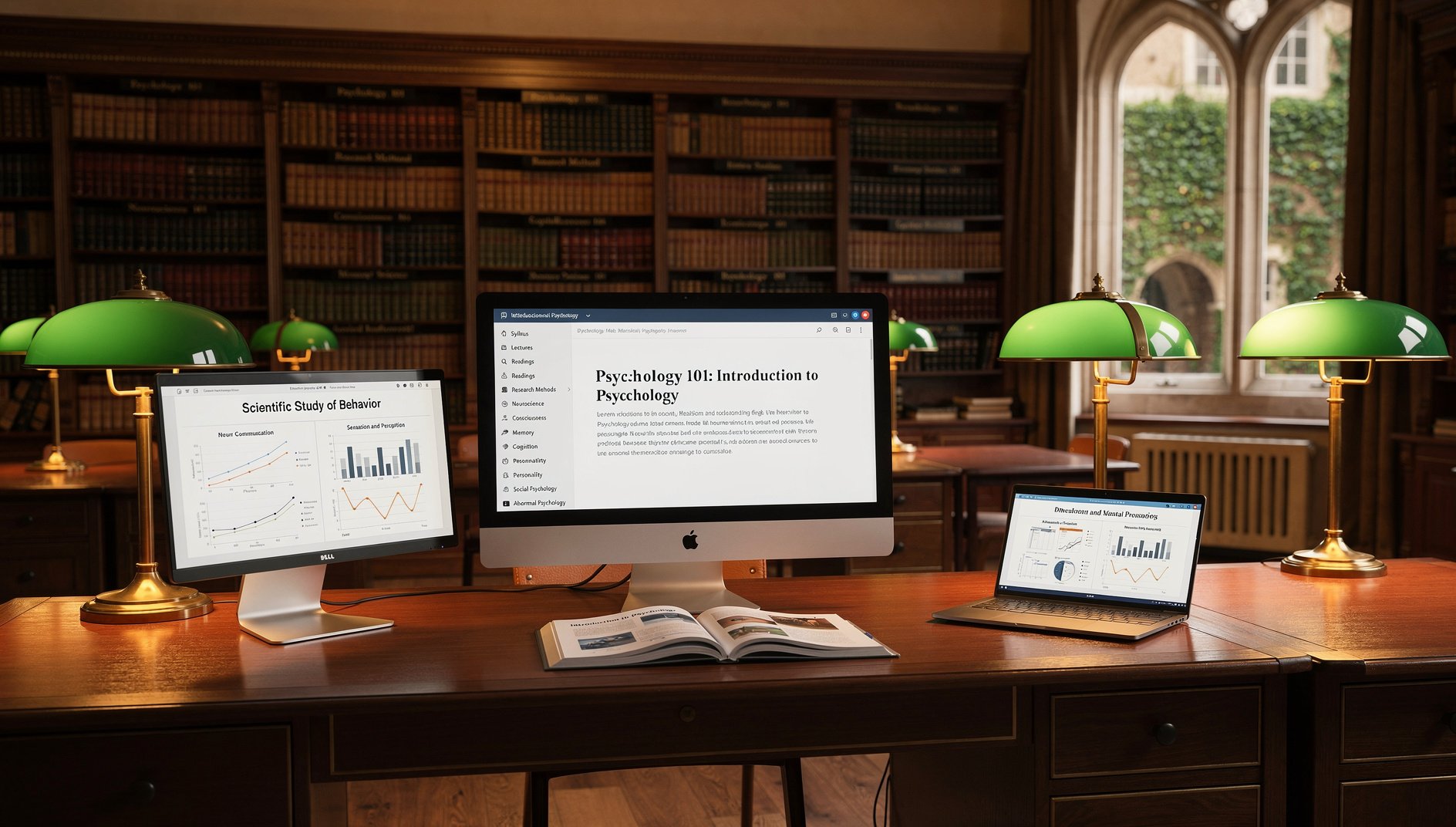
Psychology 101
Introduction to Psychology surveys the scientific study of behavior and mental processes, covering research methods, neuroscience, sensation and perception, consciousness, learning, memory, cognition, development, motivation, personality, social psychology, abnormal psychology, and therapy.
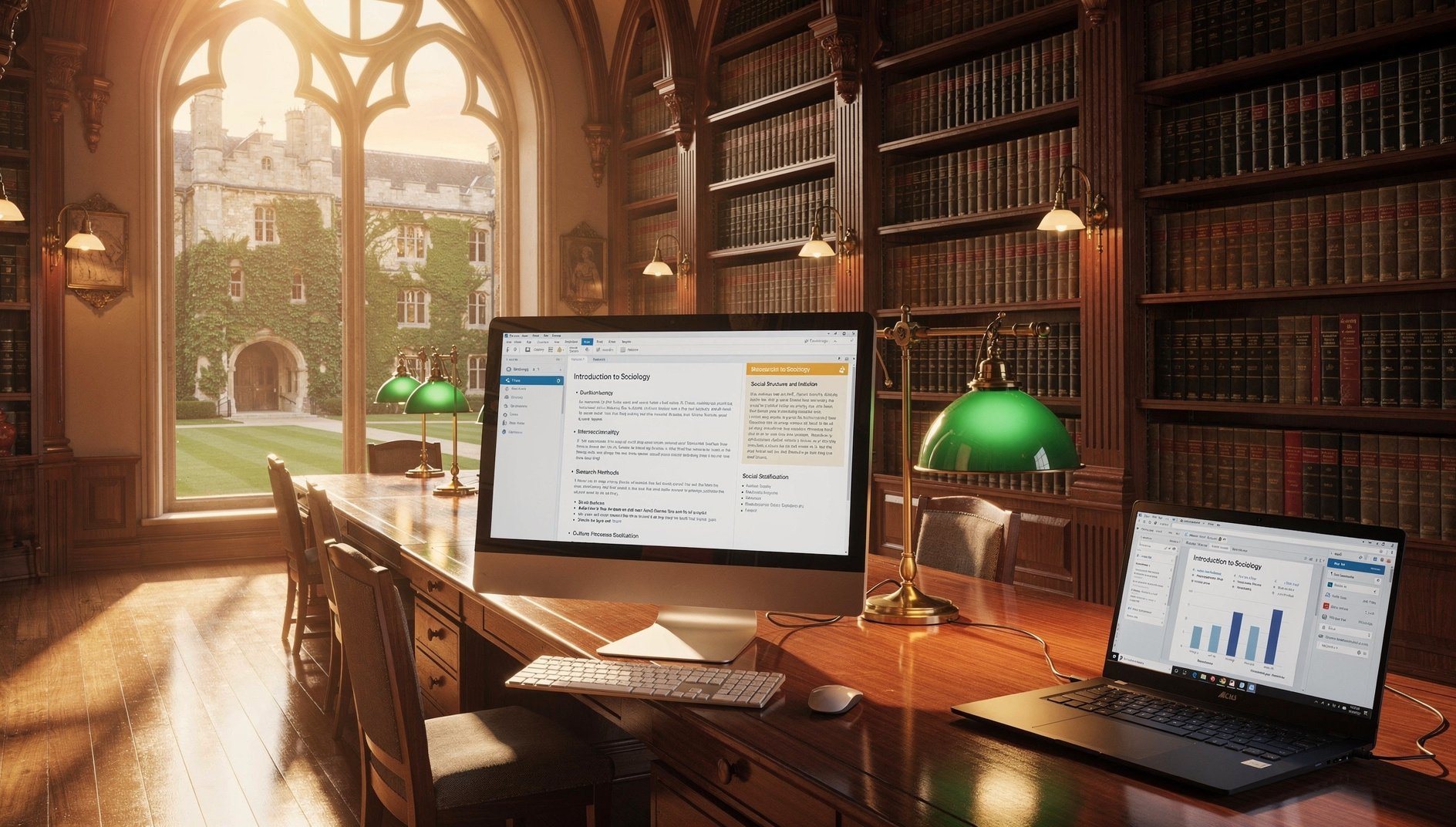
Sociology
Introduction to Sociology examines how social structures, institutions, and processes shape human behavior, covering sociological theory from Durkheim, Marx, and Weber through contemporary intersectionality, research methods, culture, socialization, stratification, deviance, and social change.

Statistics
Statistics introduces data literacy through descriptive statistics, probability, discrete and continuous distributions, the central limit theorem, correlation, linear regression, and a conceptual introduction to confidence intervals and hypothesis testing — at a practical, accessible level without AP-depth derivations.
Associate

Algebra II
Algebra II extends algebraic reasoning to a full catalog of function families — polynomial, rational, exponential, logarithmic, radical, and piecewise — plus complex numbers, matrices, conic sections, sequences and series, and combinatorics with probability.

American Literature
American Literature surveys the major works, authors, and movements of the American literary tradition from colonial Puritan writing to contemporary multicultural fiction, tracing recurring themes of identity, freedom, race, and the American Dream across four centuries.
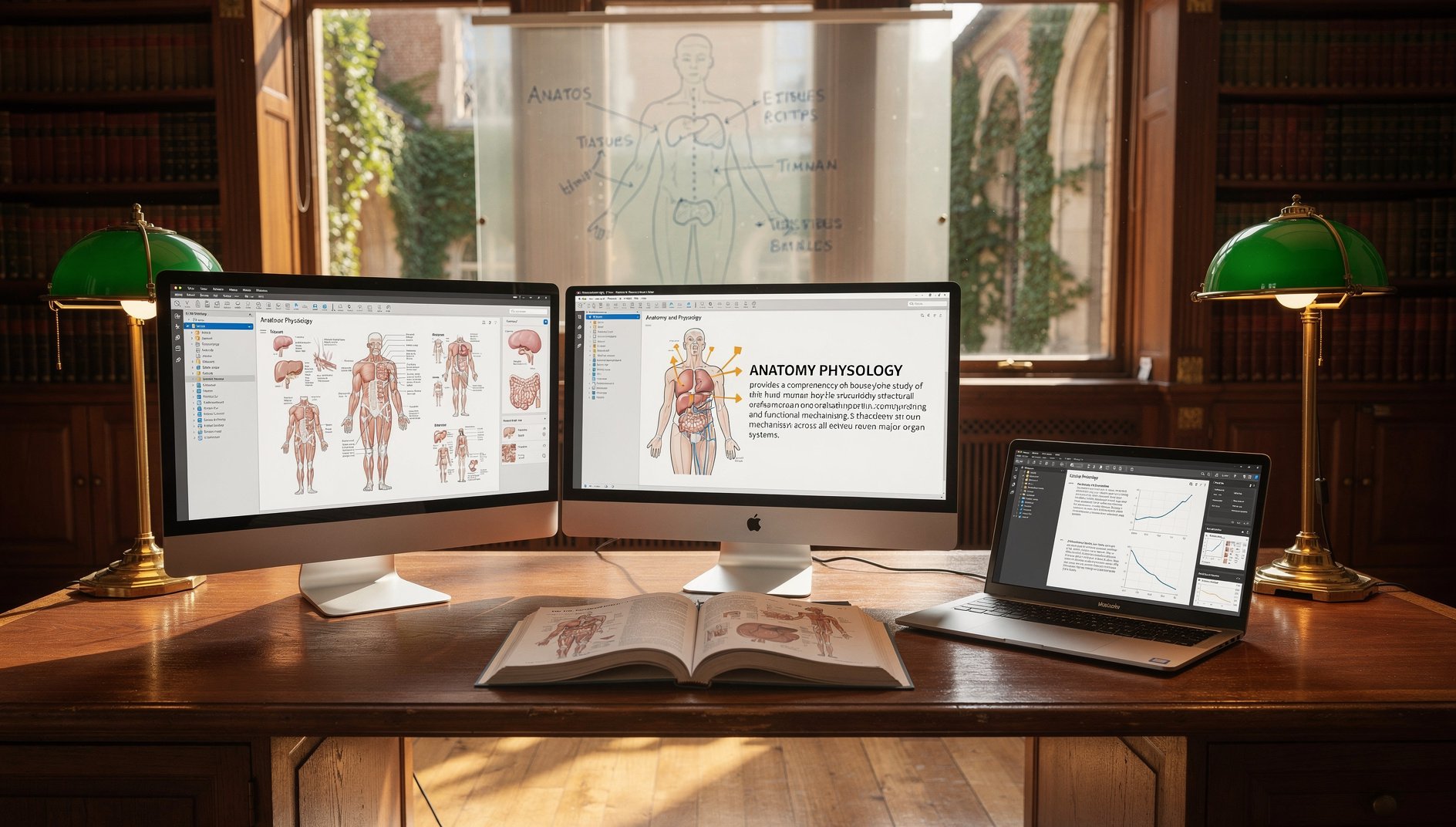
Anatomy and Physiology
Anatomy and Physiology provides a comprehensive study of the human body's structural organization and functional mechanisms across all eleven major organ systems. The course integrates anatomical terminology, tissue-level organization, and physiological processes to build a unified understanding of how the body maintains homeostasis.
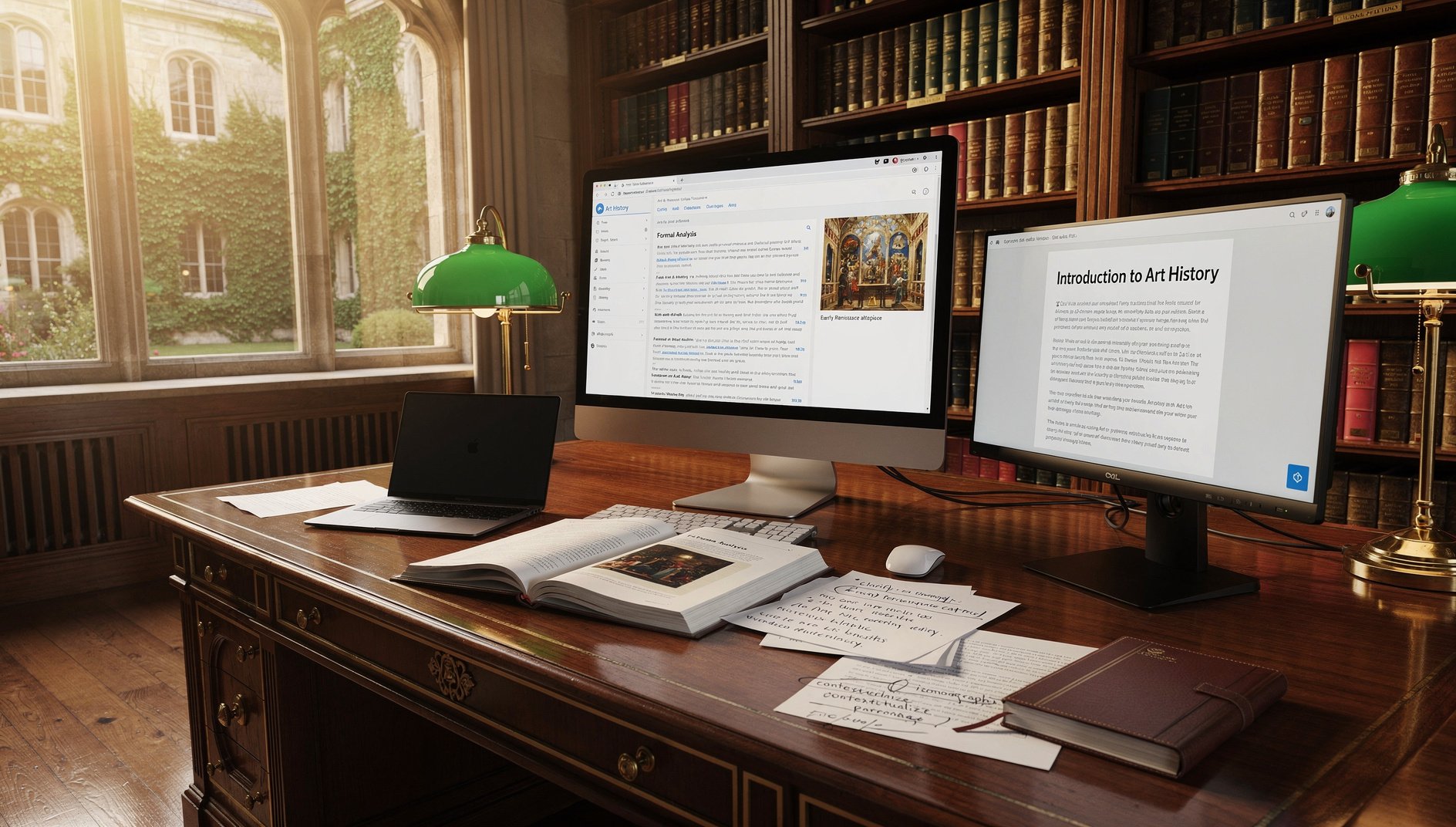
Art History
Art History surveys visual art from prehistoric cave paintings through contemporary global production, building formal analysis skills and contextual understanding across Western and non-Western traditions — from Egyptian hieratic sculpture and Byzantine mosaics through Impressionism, Cubism, and Abstract Expressionism.
British Literature
British Literature surveys the major works, authors, and literary movements of the British tradition from Beowulf through contemporary multicultural fiction, tracing the evolution of poetic and prose forms alongside the social, political, and cultural history of Britain.
Composition and Essay Writing
Composition and Essay Writing develops the complete skill set for academic writing from prewriting through publication, covering essay structures, argument construction, rhetorical appeals, paragraph development, source integration, citation, and style — building confident, clear, and persuasive writers.
Earth Science
The Earth Science course covers the physical systems of Earth — from the deep interior to the outer atmosphere — giving learners a comprehensive foundation in geology, oceanography, meteorology, climate, and the human relationship with natural resources.
Earth Systems
Earth Systems explores planet Earth as a set of interacting spheres — geosphere, hydrosphere, atmosphere, and biosphere — examining plate tectonics in depth, geochemical cycles, geological time, atmospheric circulation, ocean dynamics, Earth's energy budget, and the human-accelerated disruptions now rewriting these systems.
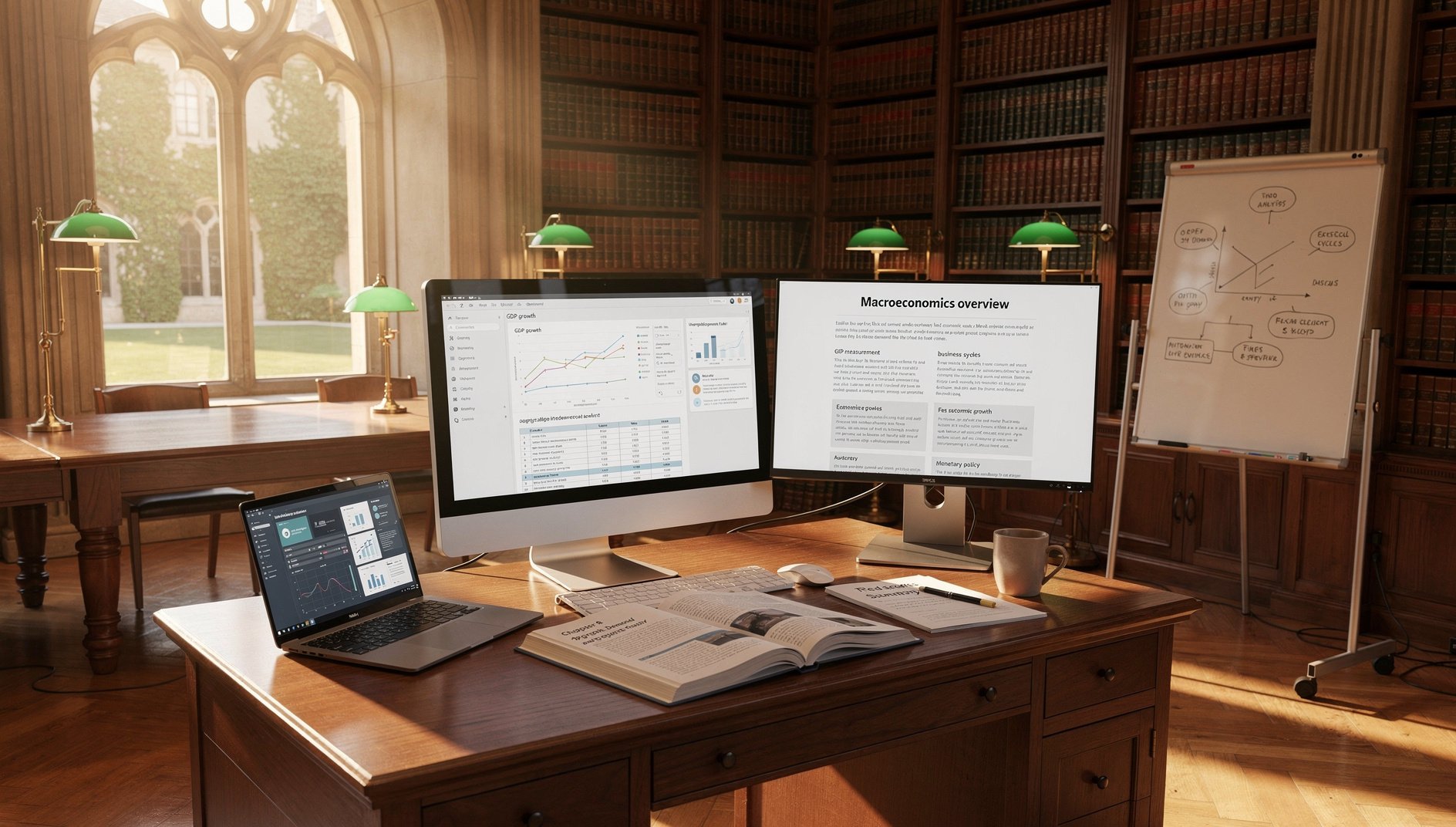
Economics Macroeconomics
Macroeconomics examines the economy as a whole, covering GDP measurement, unemployment, inflation, the aggregate demand and supply model, fiscal policy, monetary policy and the Federal Reserve, business cycles, economic growth, and international trade and exchange rates.
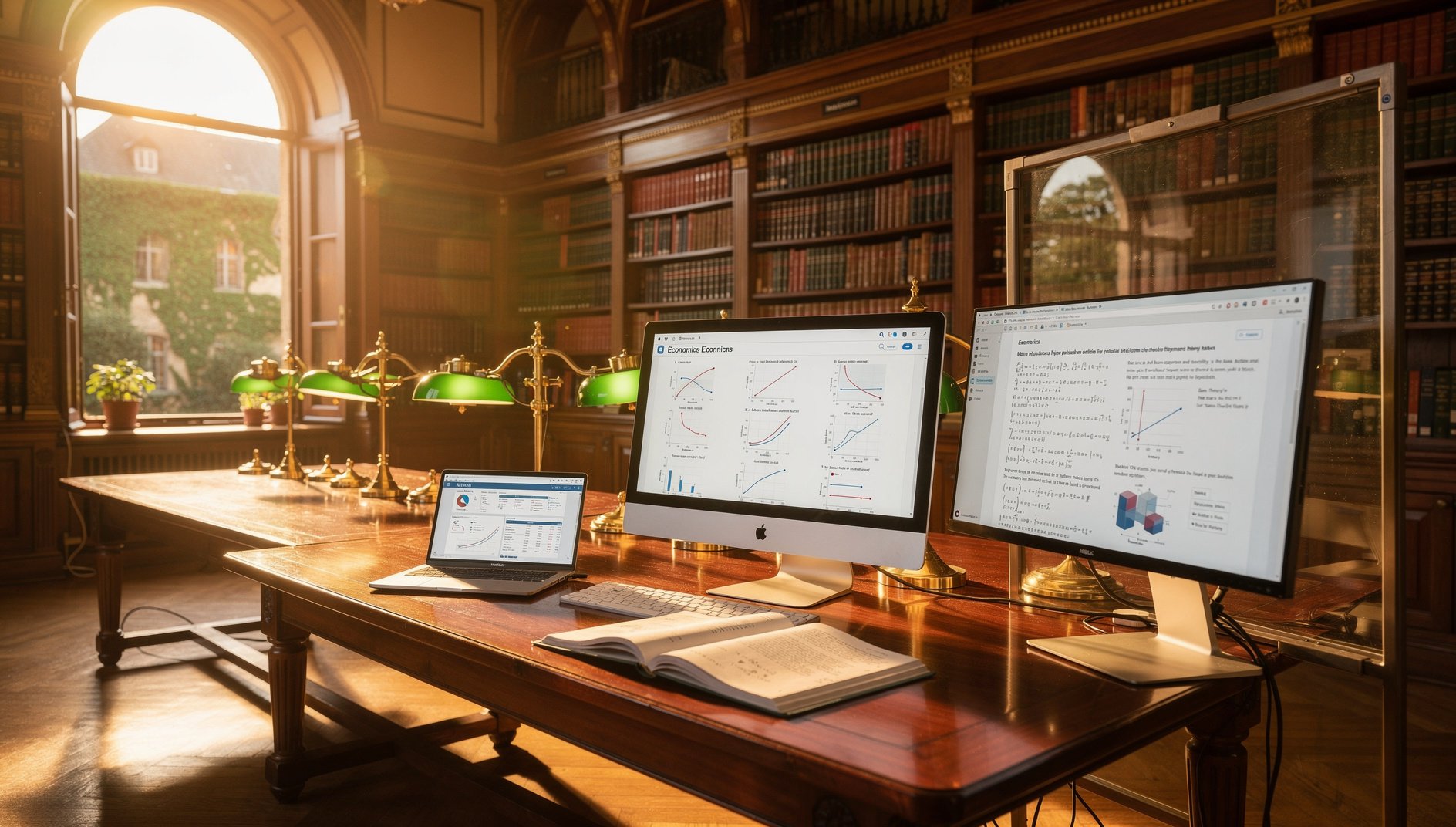
Economics Microeconomics
Microeconomics examines how individuals, firms, and markets make decisions under scarcity, covering supply and demand, cost and production theory, market structures from perfect competition to monopoly, game theory, labor markets, and market failures including externalities and public goods.

English Grammar and Writing Mechanics
The English Grammar and Writing Mechanics course provides a rigorous foundation in the rules and conventions of Standard American English, covering parts of speech, sentence structure, punctuation, agreement, verb tense, and style — equipping learners to write clearly, correctly, and persuasively.
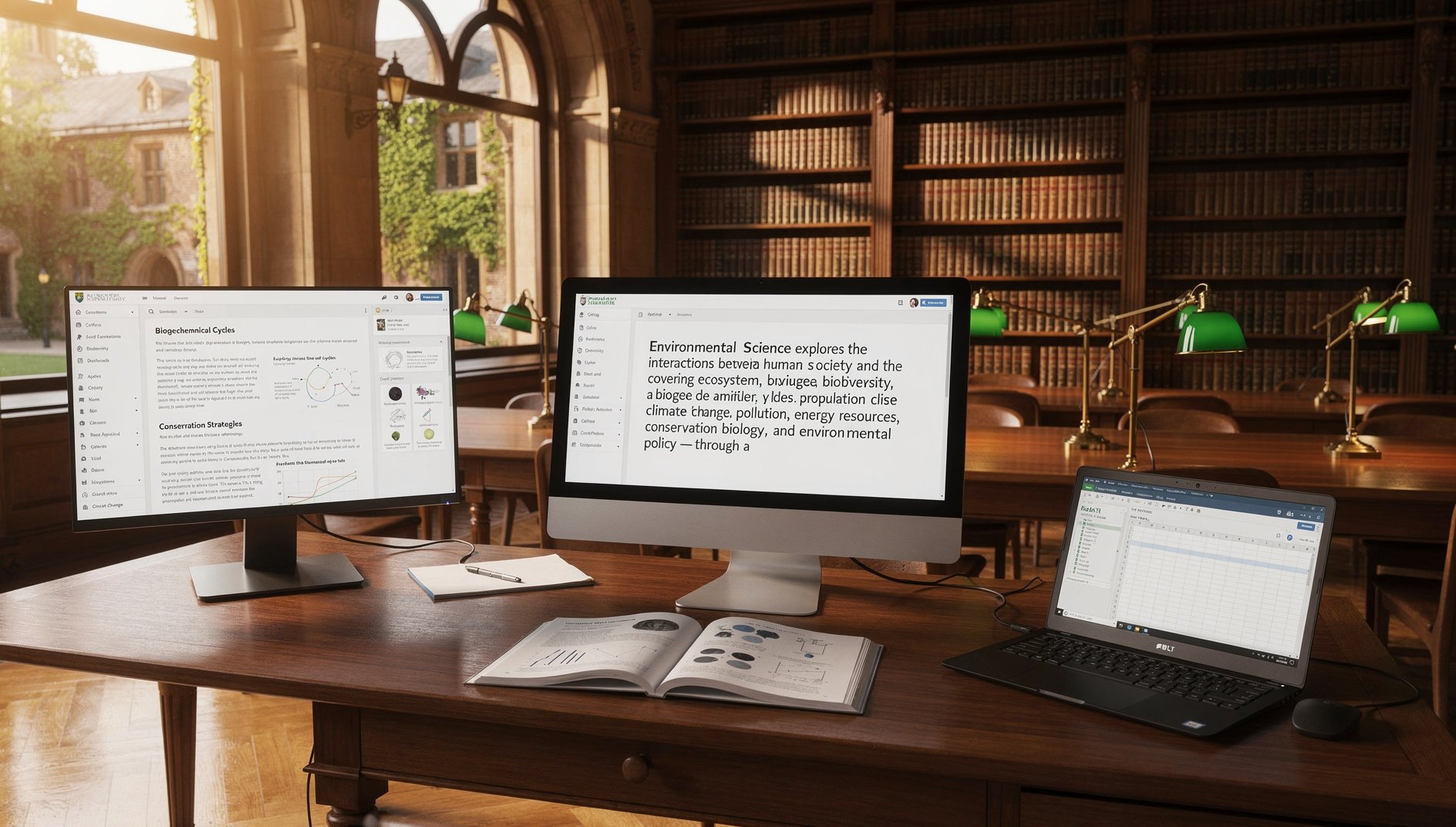
Environmental Science
Environmental Science explores the interactions between human society and the natural world — covering ecosystems, biodiversity, biogeochemical cycles, population dynamics, climate change, pollution, energy resources, conservation biology, and environmental policy — through a systems-thinking lens.
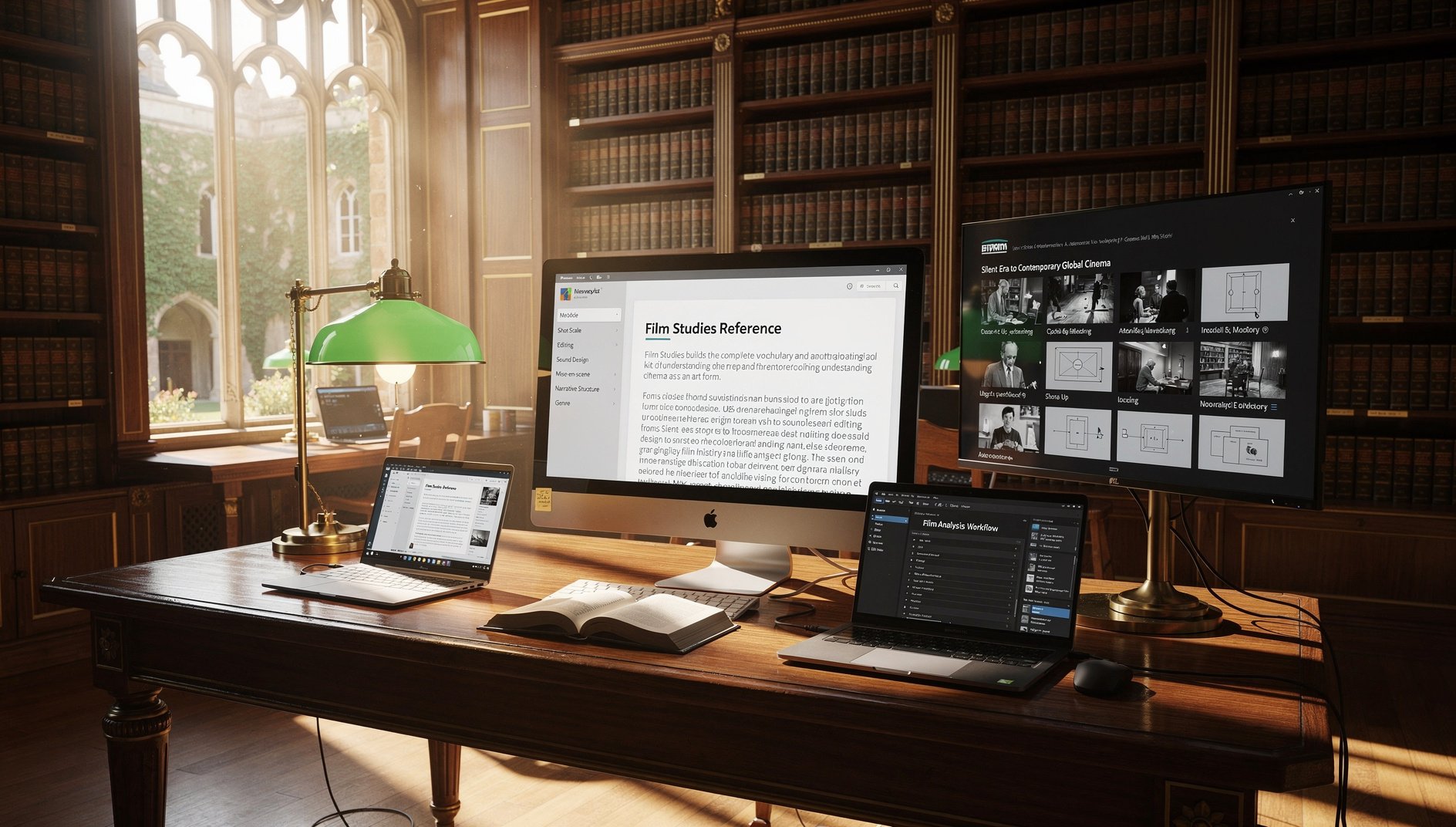
Film Studies
Film Studies builds the complete vocabulary and analytical toolkit for understanding cinema as an art form — from shot scale and editing to sound design, mise-en-scène, narrative structure, and genre — surveying film history from the silent era through contemporary global cinema.
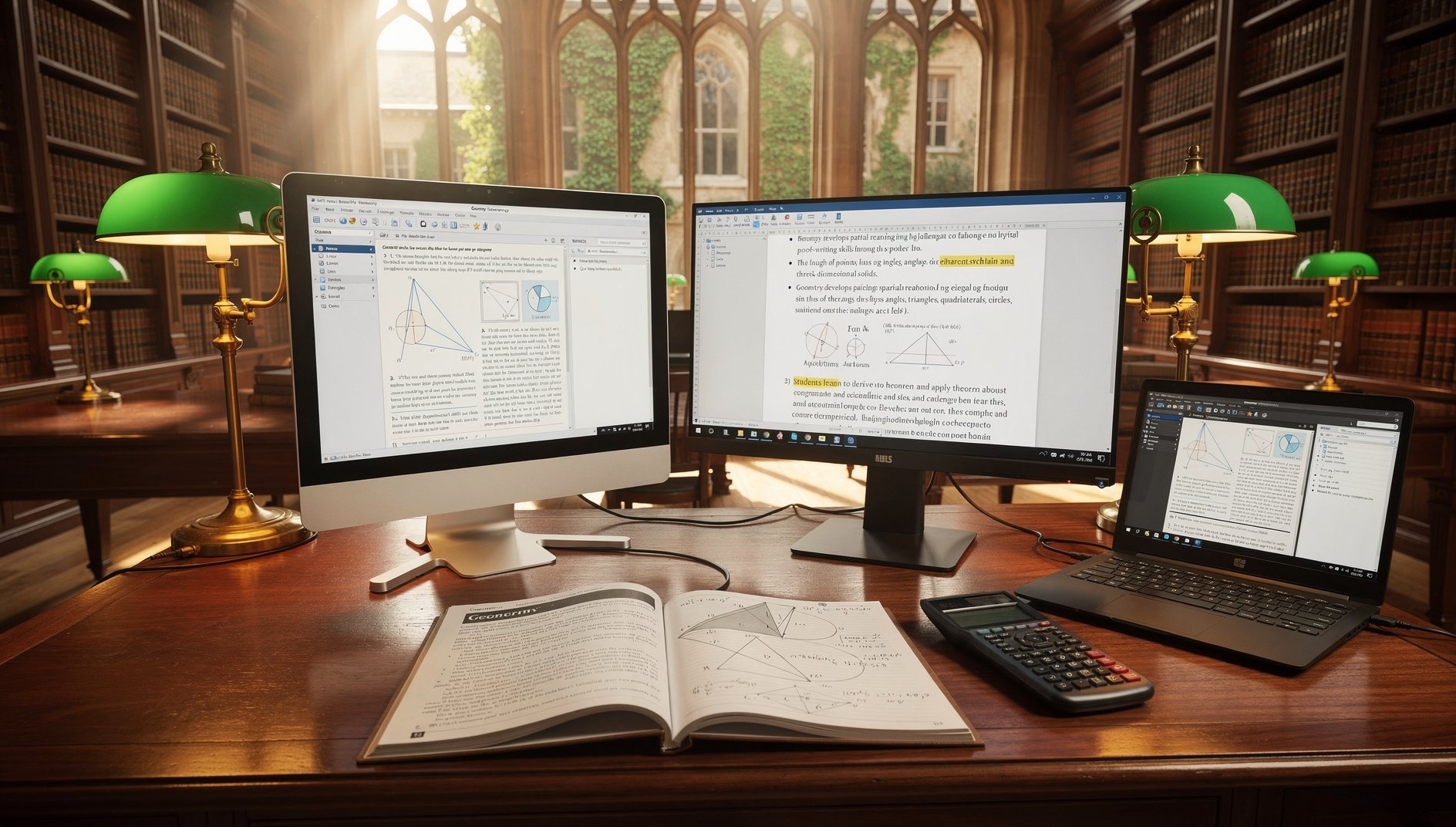
Geometry
Geometry develops spatial reasoning and logical proof-writing skills through the study of points, lines, angles, triangles, quadrilaterals, circles, and three-dimensional solids. Students learn to derive and apply theorems about congruence and similarity, calculate measurements of planar and solid figures, and use coordinate methods to verify geometric relationships.
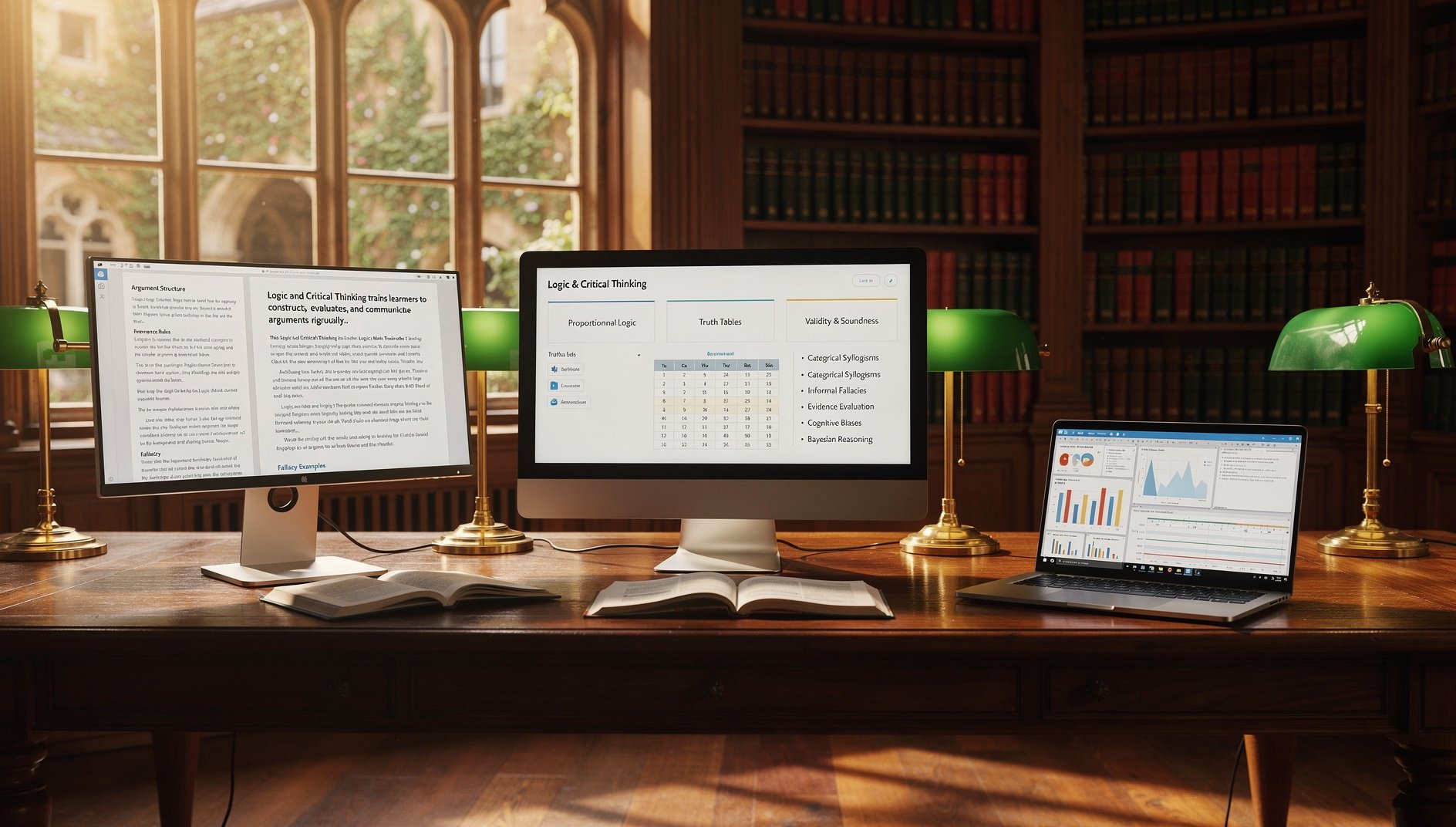
Logic and Critical Thinking
Logic and Critical Thinking trains learners to construct, evaluate, and communicate arguments rigorously by covering propositional logic, truth tables, validity and soundness, categorical syllogisms, informal fallacies, evidence evaluation, cognitive biases, and Bayesian probability. The course develops both formal analytical skills and practical epistemic habits for navigating the information-rich modern world.
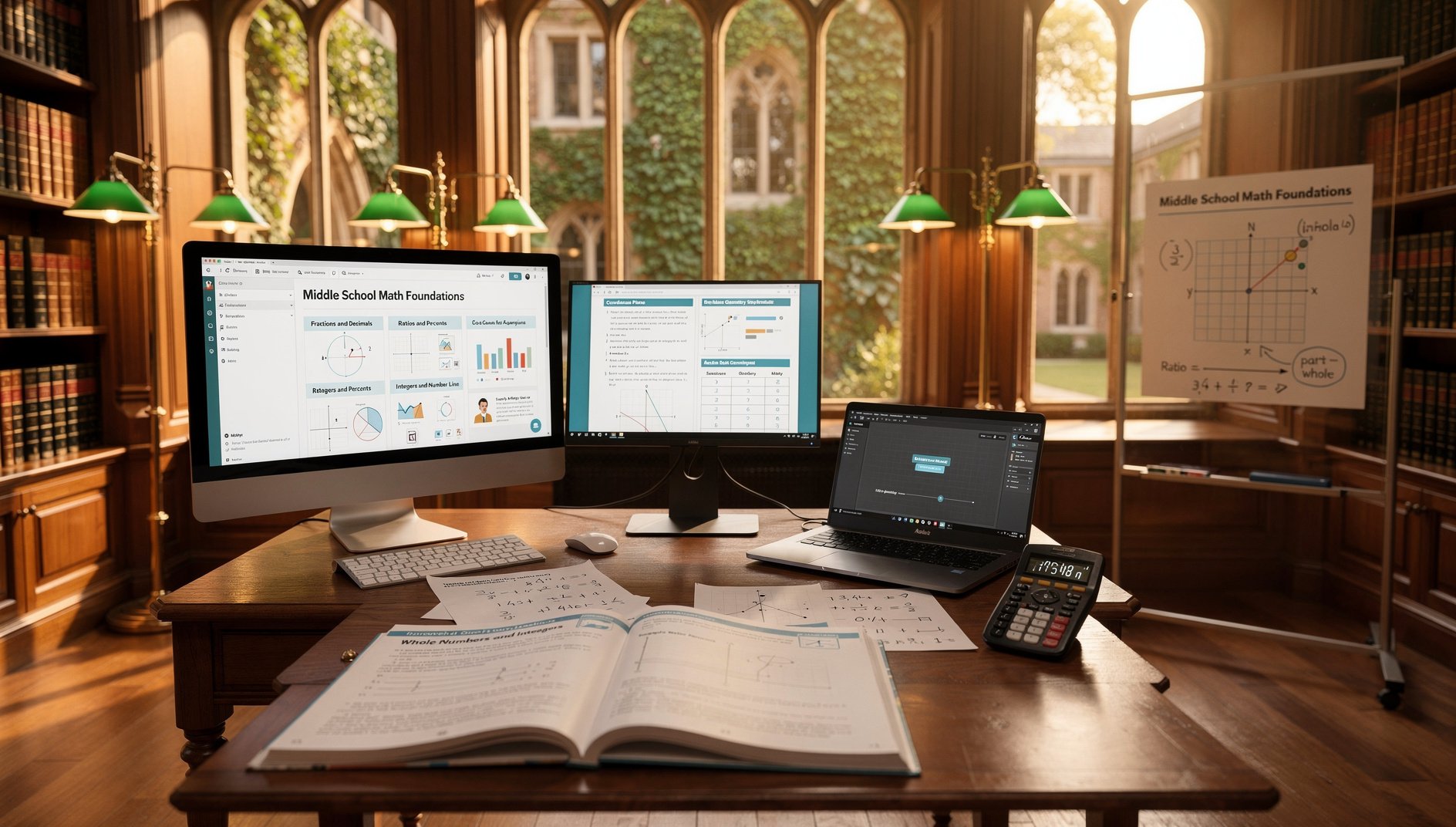
Middle School Math Foundations
Middle School Math Foundations covers the core numeracy concepts students need in grades 6-7: whole numbers, integers, fractions, decimals, ratios, percents, basic geometry, coordinate plane, measurement, and introductory data and probability.
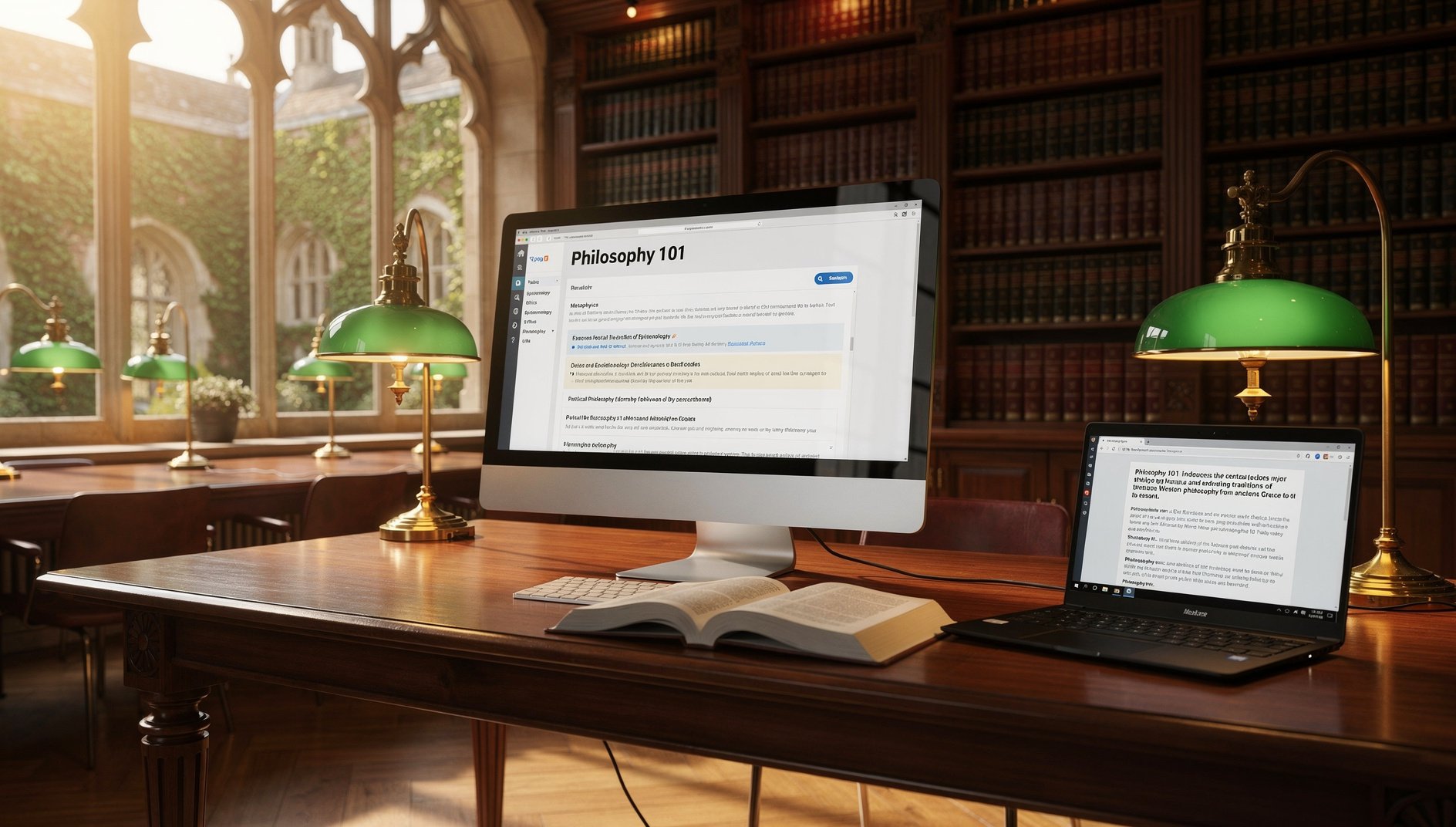
Philosophy 101
Philosophy 101 introduces the central questions, major thinkers, and enduring traditions of Western philosophy from ancient Greece to the present, covering metaphysics, epistemology, ethics, political philosophy, and philosophy of mind — building the conceptual tools to think rigorously about fundamental questions.

Physical Science
Physical Science is a grade 8 course bridging chemistry and physics — covering matter and atoms, forces and motion, energy and heat, waves and the electromagnetic spectrum, and electricity and magnetism — with a balance of conceptual understanding and simple quantitative applications.
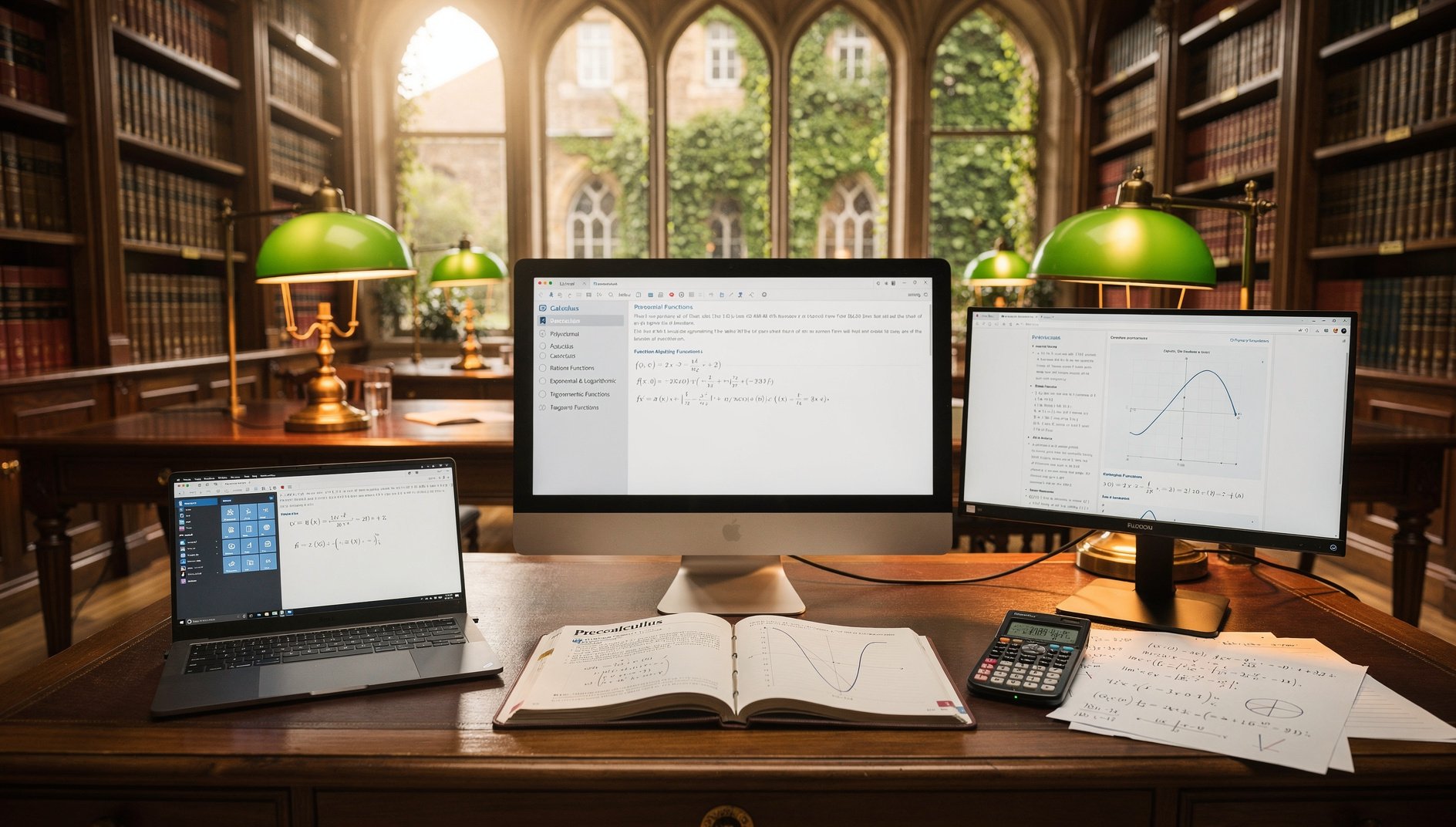
Pre Calculus
Pre-Calculus bridges the gap between Algebra and Calculus by deepening students' understanding of function behavior across polynomial, rational, exponential, logarithmic, and trigonometric families. The course also covers conic sections, sequences and series, vectors, polar coordinates, and an informal introduction to limits that prepares students for the rigors of Calculus.
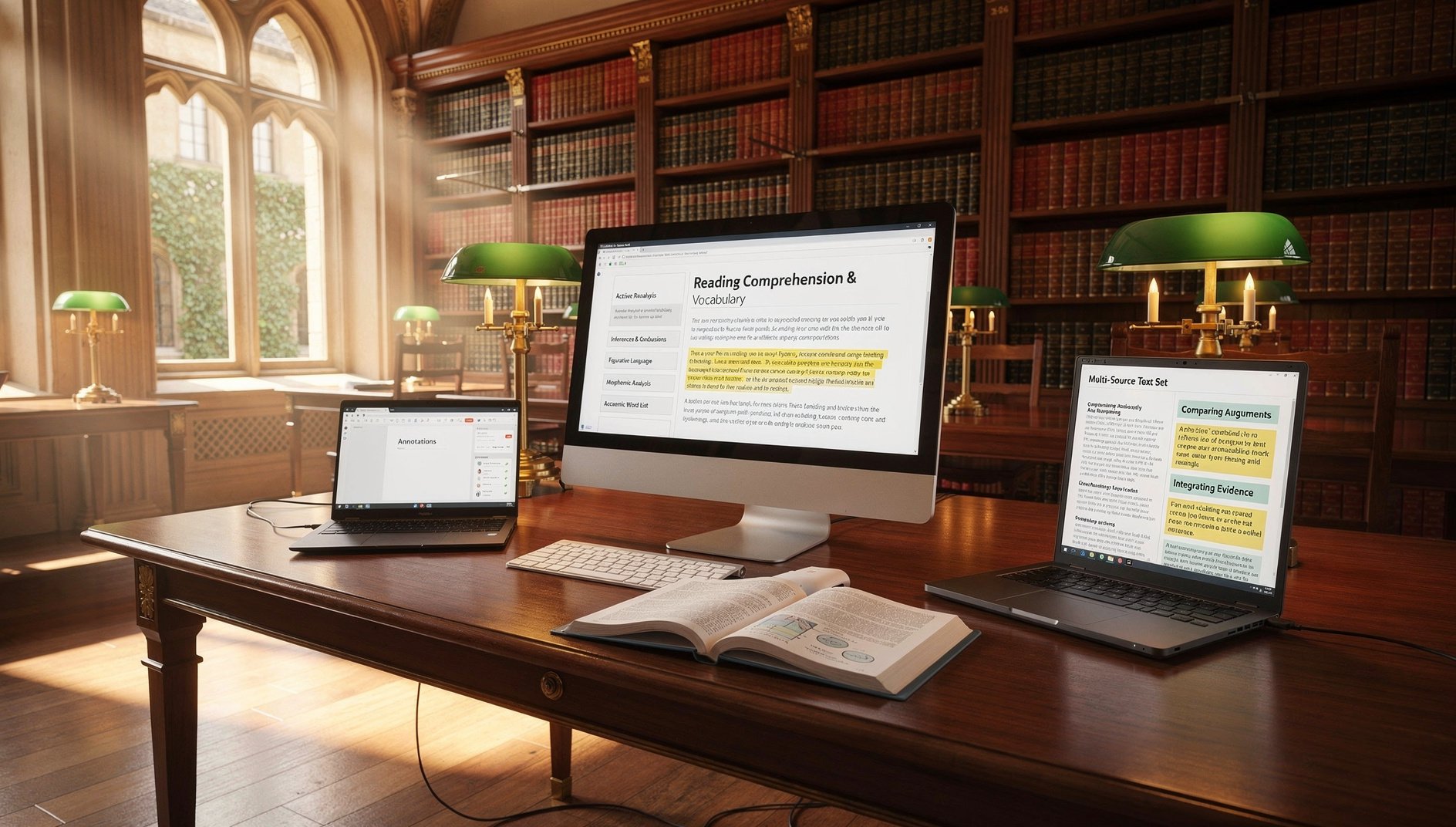
Reading Comprehension and Vocabulary
Reading Comprehension and Vocabulary builds the full skill set for understanding complex texts across genres — from active reading strategies and inference to figurative language, morphemic vocabulary analysis, academic word knowledge, and multi-source synthesis.
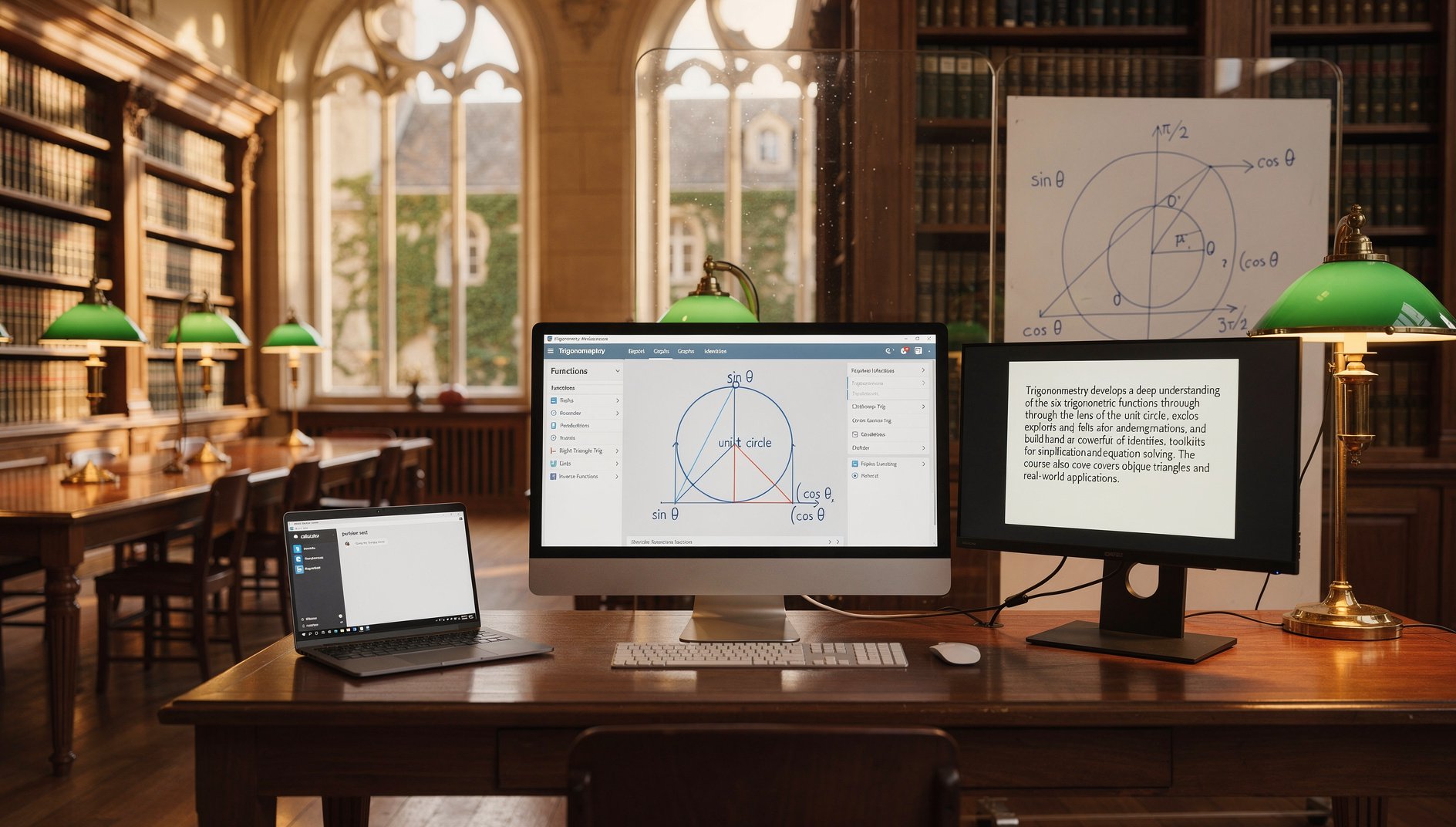
Trigonometry
Trigonometry develops a deep understanding of the six trigonometric functions through the lens of the unit circle, explores their graphs and transformations, and builds a powerful toolkit of identities for simplification and equation solving. The course also covers oblique triangle applications using the Law of Sines and Law of Cosines, and concludes with the polar form of complex numbers and De Moivre's Theorem.
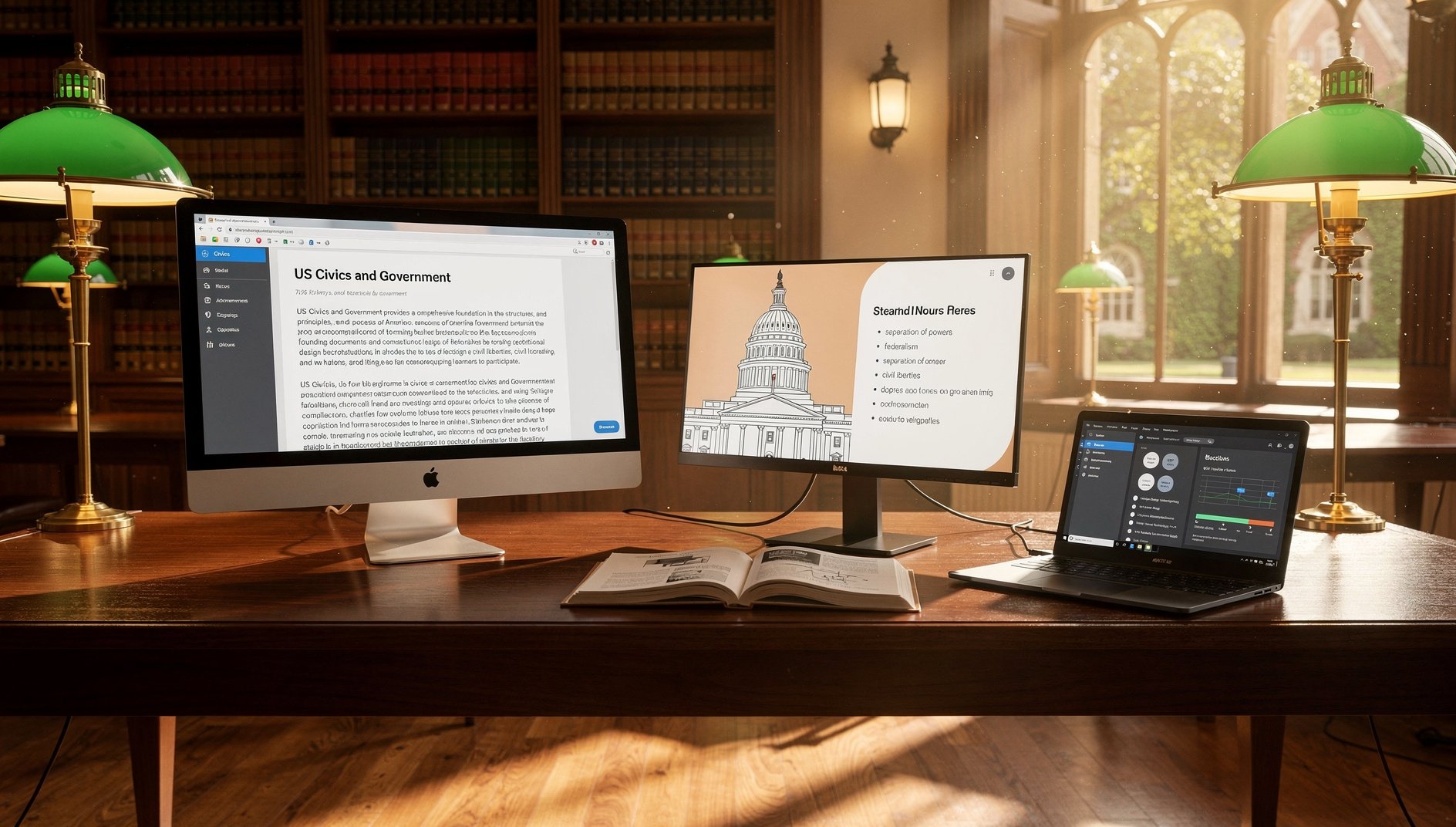
US Civics and Government
US Civics and Government provides a comprehensive foundation in the structure, principles, and processes of American government — from the founding documents and constitutional design to elections, civil liberties, and citizenship — equipping learners to participate knowledgeably in democratic life.
US History
The US History course surveys the political, social, economic, and cultural development of the United States from the colonial era through the post-9/11 world, equipping learners to recall key events, interpret cause-effect relationships, and compare historical patterns across eras.
World History Ancient
World History: Ancient Civilizations surveys the full sweep of human experience from the Paleolithic through 500 CE, covering prehistory, river-valley civilizations, classical empires, early religions, and the first global trade networks.

World History Medieval
World History: Medieval Era covers the major civilizations and transformations from 500 to 1500 CE including the Byzantine Empire, the rise of Islam, feudal Europe, the Crusades, the Mongol Empire, medieval Asia and Africa, and the Renaissance.
World History Modern
World History: Modern Era surveys the transformative events from 1500 to the present, including exploration and colonization, Enlightenment revolutions, industrialization, imperialism, both World Wars, the Cold War, decolonization, and the challenges of a globalized world.

World Literature
World Literature surveys the major literary traditions of the globe from ancient Mesopotamia and Greece through medieval Islamic and Japanese prose, the European novel, Latin American magical realism, and contemporary African and Asian voices, building cross-cultural reading skills and comparative literary analysis.
Why AccelaStudy® AI
40-60% Less Study Time
Skip what you know. Target what you don't.
Score Prediction
Know your pass probability before booking the exam.
Cross-Domain Transfer
Knowledge transfers automatically between related domains.
Start studying Foundational Academics today
Adaptive learning that skips what you know and targets what you don't.
Create Free Account