Coming Soon
Expected availability announced soon
This course is in active development. Preview the scope below and create a free account to be notified the moment it goes live.
PowerVC Administrator
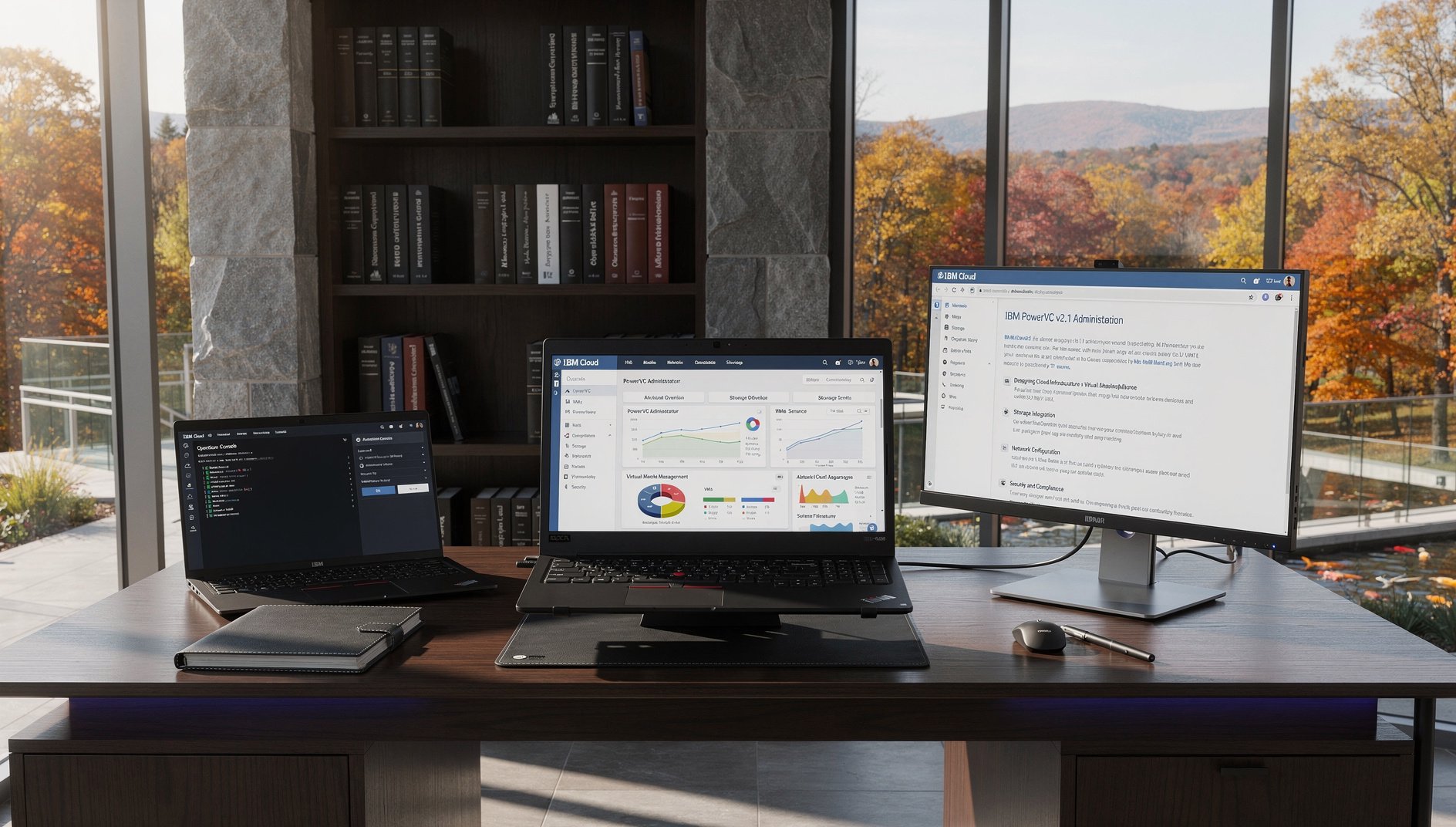
The course teaches administrators how to design, install, and manage IBM PowerVC v2.1, covering architecture, VM, storage, network, and security to ensure efficient, compliant cloud infrastructure.
90
Minutes
62
Questions
62/100
Passing Score
$200
Exam Cost
Who Should Take This
It is intended for system administrators, cloud engineers, and infrastructure managers with at least two years of experience in virtualization or IBM Power systems who aim to validate their expertise and lead PowerVC deployments. They seek to deepen strategic planning, operational analysis, and compliance capabilities.
What's Covered
1Domain 1: PowerVC Architecture and Installation
2Domain 2: Virtual Machine Management
3Domain 3: Storage Management
4Domain 4: Network Management
5Domain 5: Security and Compliance
6Domain 6: Monitoring and Troubleshooting
What's Included in AccelaStudy® AI
Adaptive Knowledge Graph
Practice Questions
Lesson Modules
Console Simulator Labs
Exam Tips & Strategy
13 Activity Formats
Course Outline
1Domain 1: PowerVC Architecture and Installation 3 topics
Platform Architecture
- Implement PowerVC installation on RHEL or AIX with prerequisites, database configuration, and license activation.
- Configure PowerVC connectivity to HMC, NovaLink, and storage subsystems for resource discovery.
- Analyze PowerVC deployment architectures to design single-node and high-availability configurations.
- Design PowerVC integration architecture connecting virtualization management with cloud orchestration.
OpenStack Components
- Implement PowerVC OpenStack services including Nova, Glance, Cinder, and Neutron for POWER management.
- Configure Keystone identity service with LDAP integration for centralized authentication.
- Analyze OpenStack service health using PowerVC diagnostic tools and log analysis.
Host and Fabric
- Implement host registration with HMC connections, managed system discovery, and host group configuration.
- Configure storage connectivity validation for SAN fabric discovery and multipath verification.
- Analyze host resource capacity to plan virtual machine placement and resource allocation.
2Domain 2: Virtual Machine Management 3 topics
VM Provisioning
- Implement VM deployment using deploy templates with compute, storage, and network profiles.
- Configure capture and deploy workflows for golden image management with customization scripts.
- Analyze VM placement policies to optimize resource utilization across managed hosts.
- Design VM provisioning strategies with quota management, approval workflows, and self-service.
VM Lifecycle
- Implement VM lifecycle operations including resize, migrate, snapshot, and clone procedures.
- Configure VM affinity and anti-affinity rules for workload distribution and availability.
- Analyze VM resource utilization trends to recommend rightsizing and rebalancing actions.
Dynamic Resource Optimization
- Implement DRO policies for automated VM placement optimization based on utilization thresholds.
- Configure live partition mobility through PowerVC for non-disruptive workload migration.
- Analyze DRO recommendations to evaluate optimization actions and validate improvements.
- Design automated resource management balancing performance, energy efficiency, and availability.
3Domain 3: Storage Management 3 topics
Storage Providers
- Implement storage provider registration for SVC, Storwize, FlashSystem, and DS8000 subsystems.
- Configure storage templates with volume types, performance tiers, and thin provisioning policies.
- Analyze storage pool capacity and performance to design tiered storage allocation.
Volume Management
- Implement boot volume and data volume provisioning with multi-attach and shared storage.
- Configure volume snapshot and clone operations for data protection and test environments.
- Analyze volume performance metrics to identify I/O hotspots and recommend tier migrations.
- Design storage architecture with SAN zoning, multipath I/O, and pool isolation for multi-tenancy.
Storage Optimization
- Implement storage capacity monitoring with threshold alerts and automated cleanup policies.
- Configure storage migration workflows for non-disruptive volume relocation between pools.
- Analyze storage efficiency metrics including thin provisioning ratios and compression savings.
4Domain 4: Network Management 3 topics
Virtual Network Configuration
- Implement virtual network definitions with VLAN, vSwitch, and shared Ethernet adapter configurations.
- Configure network templates for consistent VM network provisioning across managed environments.
- Analyze virtual network topology to troubleshoot connectivity issues and validate VLAN assignments.
Network Integration
- Implement PowerVC integration with external SDN controllers for programmatic network provisioning.
- Configure network security groups with inbound and outbound rules for VM traffic control.
- Analyze network bandwidth utilization across virtual switches to identify congestion.
- Design network architecture for PowerVC-managed environments with isolation and redundancy.
IP Address Management
- Implement IP group configuration for automated IP address allocation during VM provisioning.
- Configure DNS and DHCP integration for dynamic hostname resolution and IP management.
- Analyze IP address pool utilization to plan subnet expansion and address recycling.
5Domain 5: Security and Compliance 3 topics
Access Control
- Implement role-based access control with project-level permissions for VM, storage, and network.
- Configure LDAP group mapping to PowerVC roles for centralized identity management.
- Analyze access control audit logs to detect privilege escalation and unauthorized operations.
Data Protection
- Implement VM encryption at rest using storage-level encryption and key management integration.
- Configure secure communication between PowerVC components using TLS certificate management.
- Analyze data protection compliance to validate encryption and audit trail coverage.
- Design security architecture for multi-tenant PowerVC with data isolation and compliance controls.
Backup and Recovery
- Implement PowerVC configuration backup with database export and recovery procedures.
- Configure VM-level backup integration with Spectrum Protect for application-consistent protection.
- Analyze backup coverage to ensure all managed resources have appropriate protection policies.
6Domain 6: Monitoring and Troubleshooting 3 topics
System Monitoring
- Implement PowerVC dashboard monitoring with utilization, event tracking, and alert configuration.
- Configure integration with IBM Cloud Management Console for unified monitoring.
- Analyze performance trends to forecast capacity requirements and plan infrastructure expansion.
Troubleshooting
- Implement diagnostic data collection using PowerVC support tools for service request preparation.
- Configure log level management for PowerVC OpenStack services for detailed troubleshooting.
- Analyze error patterns in Nova, Cinder, and Neutron logs to diagnose provisioning failures.
- Design monitoring and alerting strategies for proactive issue detection across managed infrastructure.
Upgrade and Maintenance
- Implement PowerVC version upgrade with pre-upgrade validation and post-upgrade verification.
- Configure PowerVC maintenance windows with scheduled operations, user notifications, and service availability communication procedures.
- Analyze upgrade impact assessments to evaluate compatibility with hosts, storage, and integrations.
Scope
Included Topics
- All domains of IBM PowerVC Administrator (S2000-024).
- PowerVC v2.1: OpenStack-based POWER virtualization management.
- VM provisioning, storage, networking, DRO, and LPM.
- Security, monitoring, troubleshooting, and upgrade procedures.
Not Covered
- POWER hardware engineering and firmware.
- HMC administration beyond PowerVC integration.
- Non-IBM virtualization platforms (VMware, KVM on x86).
- Application-level administration on managed VMs.
Official Exam Page
Learn more at IBM
S2000-024 is coming soon
Adaptive learning that maps your knowledge and closes your gaps.
Create Free Account to Be Notified