Coming Soon
Expected availability announced soon
This course is in active development. Preview the scope below and create a free account to be notified the moment it goes live.
Cloud Pak Data Architect
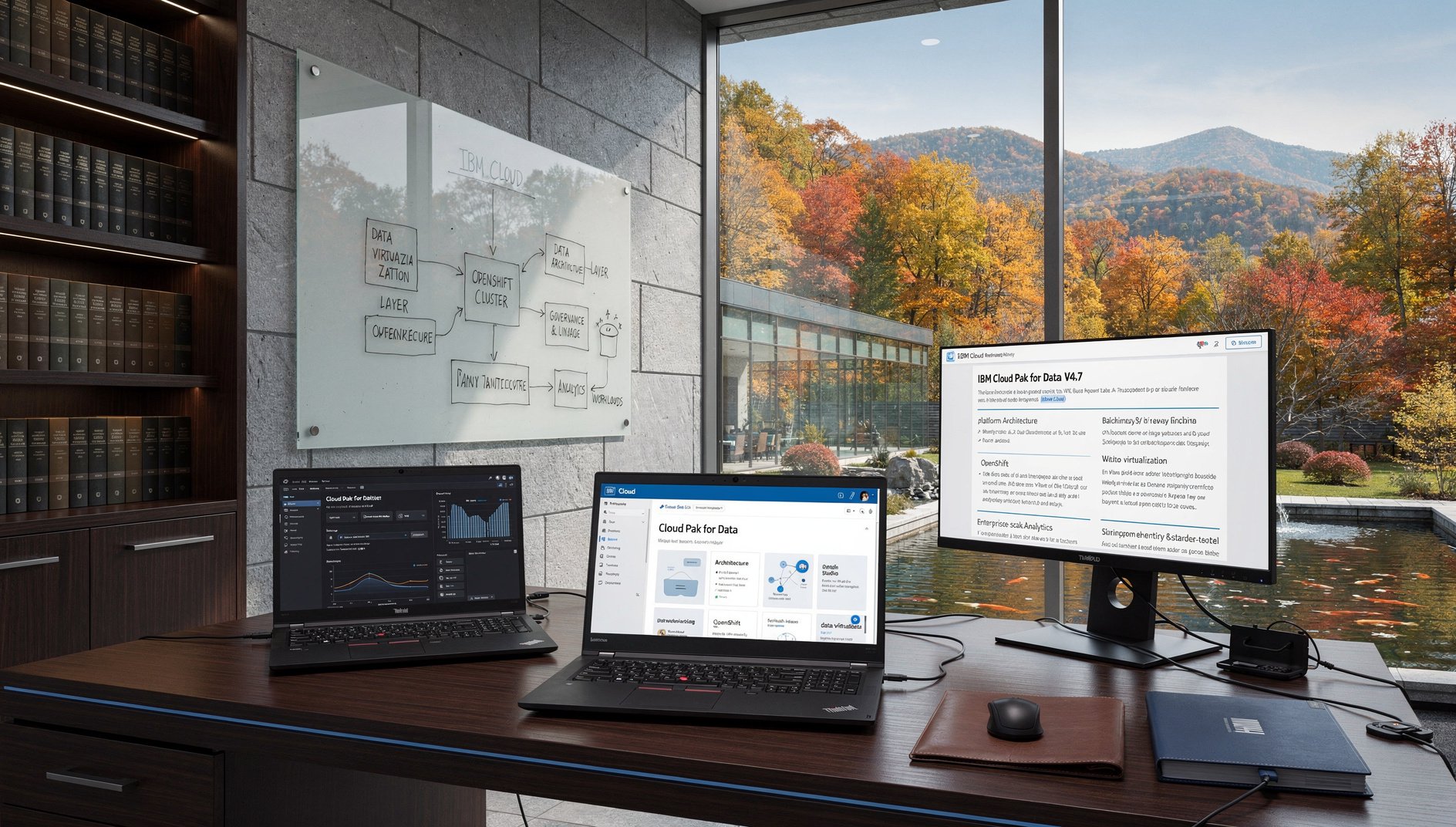
The course teaches architects how to design, deploy, and manage IBM Cloud Pak for Data V4.7, covering platform architecture, OpenShift, data virtualization, Watson Studio, and governance to enable enterprise‑scale analytics.
90
Minutes
62
Questions
62/100
Passing Score
$200
Exam Cost
Who Should Take This
It is intended for senior data engineers, solution architects, and cloud specialists who have several years of experience with IBM data services and OpenShift. These professionals seek to validate their ability to integrate data pipelines, govern assets, and lead strategic AI initiatives across the organization.
What's Covered
1Domain 1: Cloud Pak for Data Platform Architecture and Components
2Domain 2: OpenShift Deployment and Infrastructure
3Domain 3: Data Virtualization and Integration
4Domain 4: Watson Studio and Data Science Platform
5Domain 5: Watson Knowledge Catalog and Data Governance
6Domain 6: Security, Performance, and Platform Operations
What's Included in AccelaStudy® AI
Adaptive Knowledge Graph
Practice Questions
Lesson Modules
Console Simulator Labs
Exam Tips & Strategy
13 Activity Formats
Course Outline
1Domain 1: Cloud Pak for Data Platform Architecture and Components 3 topics
Platform Foundation and Core Services
- Analyze the core architectural components of Cloud Pak for Data v4.7 including control plane, compute plane, and data plane separation
- Apply knowledge of foundational services including Zen, Watson Studio, and Common Core Services to design platform deployments
- Evaluate the role of IBM Cloud Pak Foundational Services and their integration with OpenShift Container Platform
- Design service mesh architecture using Istio for inter-service communication and security in Cloud Pak for Data
- Apply configuration management principles for Cloud Pak for Data custom resources and operators
Data Services and Storage Architecture
- Analyze storage requirements and implement persistent volume configurations for different Cloud Pak for Data services
- Design data lake architecture using IBM Cloud Object Storage integration with Cloud Pak for Data
- Apply database service deployment patterns including Db2, PostgreSQL, and MongoDB within the platform
- Evaluate metadata management and catalog services integration across multiple data sources
- Implement data encryption at rest and in transit for various storage backends in Cloud Pak for Data
Microservices and Container Architecture
- Design microservices deployment patterns using Cloud Pak for Data operators and custom resource definitions
- Apply container resource limits and requests optimization for Cloud Pak for Data workloads
- Analyze pod scheduling and affinity rules for optimal service placement across OpenShift nodes
- Implement service discovery and load balancing strategies for Cloud Pak for Data microservices
- Evaluate container image security scanning and vulnerability management in Cloud Pak for Data deployments
2Domain 2: OpenShift Deployment and Infrastructure 2 topics
OpenShift Cluster Configuration
- Design OpenShift cluster sizing and node configuration for Cloud Pak for Data v4.7 workload requirements
- Apply cluster autoscaling policies and resource quotas for multi-tenant Cloud Pak for Data environments
- Implement network policies and software-defined networking for Cloud Pak for Data service isolation
- Analyze storage class configurations for dynamic provisioning of persistent volumes
- Evaluate cluster monitoring and alerting integration with Cloud Pak for Data platform metrics
Installation and Upgrade Strategies
- Apply Cloud Pak for Data installation methodologies including online, offline, and air-gapped deployments
- Design upgrade strategies for Cloud Pak for Data services with minimal downtime and data preservation
- Implement backup and disaster recovery procedures for Cloud Pak for Data metadata and configuration
- Analyze dependency management and version compatibility across Cloud Pak for Data service components
- Apply rollback procedures and service restoration techniques for failed Cloud Pak for Data deployments
3Domain 3: Data Virtualization and Integration 3 topics
Data Virtualization Architecture
- Design federated query architecture using IBM Data Virtualization to access disparate data sources
- Apply connection management and data source registration for databases, cloud services, and files
- Analyze query optimization techniques including predicate pushdown and join optimization in virtual views
- Implement data caching strategies and materialized views for improved virtual query performance
- Evaluate data security and access control policies for virtualized data across multiple sources
DataStage Integration Patterns
- Design ETL pipelines using IBM DataStage with Cloud Pak for Data integration capabilities
- Apply parallel processing and partitioning strategies for large-scale data transformation workflows
- Implement real-time data integration patterns using DataStage with streaming data sources
- Analyze job monitoring and error handling mechanisms in DataStage flow execution
- Evaluate data lineage capture and metadata propagation through DataStage transformation jobs
Data Movement and Replication
- Design change data capture (CDC) solutions for real-time data synchronization across systems
- Apply data replication patterns for hybrid cloud and multi-cloud data distribution strategies
- Implement bulk data transfer optimization techniques for large dataset migration to Cloud Pak for Data
- Analyze conflict resolution and consistency management in distributed data replication scenarios
4Domain 4: Watson Studio and Data Science Platform 3 topics
Watson Studio Environment Management
- Design project workspace architecture and collaboration patterns for data science teams in Watson Studio
- Apply runtime environment configuration including Spark clusters, GPU allocation, and compute resource management
- Implement version control integration and asset management workflows for notebooks and models
- Analyze notebook kernel management and dependency resolution for Python, R, and Scala environments
- Evaluate cost optimization strategies for Watson Studio compute resource allocation and usage
AutoAI and Model Development
- Apply AutoAI experiment configuration for automated machine learning pipeline generation
- Design feature engineering and data preprocessing strategies within AutoAI frameworks
- Analyze model performance metrics and selection criteria in AutoAI-generated candidates
- Implement hyperparameter optimization and model tuning strategies using Watson Studio tools
- Evaluate model fairness and bias detection capabilities within AutoAI workflows
Model Deployment and MLOps
- Design model deployment architectures including batch scoring, real-time inference, and edge deployment
- Apply model monitoring and drift detection strategies for production machine learning systems
- Implement CI/CD pipelines for automated model retraining and deployment using Watson Studio
5Domain 5: Watson Knowledge Catalog and Data Governance 3 topics
Data Discovery and Cataloging
- Design automated data discovery and classification workflows using Watson Knowledge Catalog
- Apply metadata enrichment and business glossary management for enterprise data assets
- Implement data profiling and quality assessment automation across diverse data sources
- Analyze data asset relationships and impact analysis through automated lineage tracking
- Evaluate search and discovery optimization techniques for large-scale data catalogs
Data Quality and Governance Policies
- Design data governance frameworks including data stewardship roles and approval workflows
- Apply data quality rules and monitoring automation for continuous data health assessment
- Implement privacy and compliance policies including GDPR and data retention management
- Analyze data quality metrics and establish KPIs for enterprise data governance programs
- Evaluate policy enforcement mechanisms and exception handling in data governance workflows
Data Lineage and Impact Analysis
- Design end-to-end data lineage tracking across ETL processes, analytics, and machine learning workflows
- Apply automated lineage capture from DataStage, Watson Studio, and third-party tools
- Implement impact analysis reporting for data source changes and system modifications
- Analyze column-level lineage and transformation tracking for regulatory compliance requirements
6Domain 6: Security, Performance, and Platform Operations 3 topics
Security Architecture and Access Control
- Design identity and access management integration using LDAP, SAML, and OAuth for Cloud Pak for Data
- Apply role-based access control (RBAC) and fine-grained permissions across data assets and services
- Implement data encryption strategies including at-rest, in-transit, and application-level encryption
- Analyze certificate management and PKI infrastructure for secure service communication
- Evaluate network security policies and firewall configurations for Cloud Pak for Data deployments
Performance Optimization and Scaling
- Design horizontal and vertical scaling strategies for Cloud Pak for Data service components
- Apply performance tuning techniques for Spark clusters and distributed computing workloads
- Implement caching strategies and memory optimization for improved query and analytics performance
- Analyze resource utilization patterns and capacity planning for multi-tenant environments
- Evaluate load balancing and traffic distribution strategies for high-availability deployments
Monitoring and Operational Excellence
- Design comprehensive monitoring architecture including metrics, logs, and distributed tracing
- Apply automated alerting and incident response procedures for Cloud Pak for Data platform health
- Implement service level objectives (SLOs) and error budgets for platform reliability management
- Analyze platform usage patterns and implement chargeback models for cost allocation
Scope
Included Topics
- All domains of C1000-173 IBM Certified Architect - Cloud Pak for Data V4.7: Cloud Pak for Data v4.7 architecture: platform components, deployment on OpenShift; data virtualization, data integration with DataStage; Watson Studio, AutoAI, notebooks for data science; Watson Know.
- Exam-specific technical content covering ledge Catalog, data governance, lineage; platform security, access control, encryption; performance optimization, scaling, monitoring..
Not Covered
- Topics outside the C1000-173 exam scope and other certification levels.
- Current pricing, promotional offers, and vendor-specific values that change over time.
- Implementation details for competing vendor products and platforms.
Official Exam Page
Learn more at IBM
C1000-173 is coming soon
Adaptive learning that maps your knowledge and closes your gaps.
Create Free Account to Be Notified