This course is in active development. Preview the scope below and create a free account to be notified the moment it goes live.
Maximo Administrator
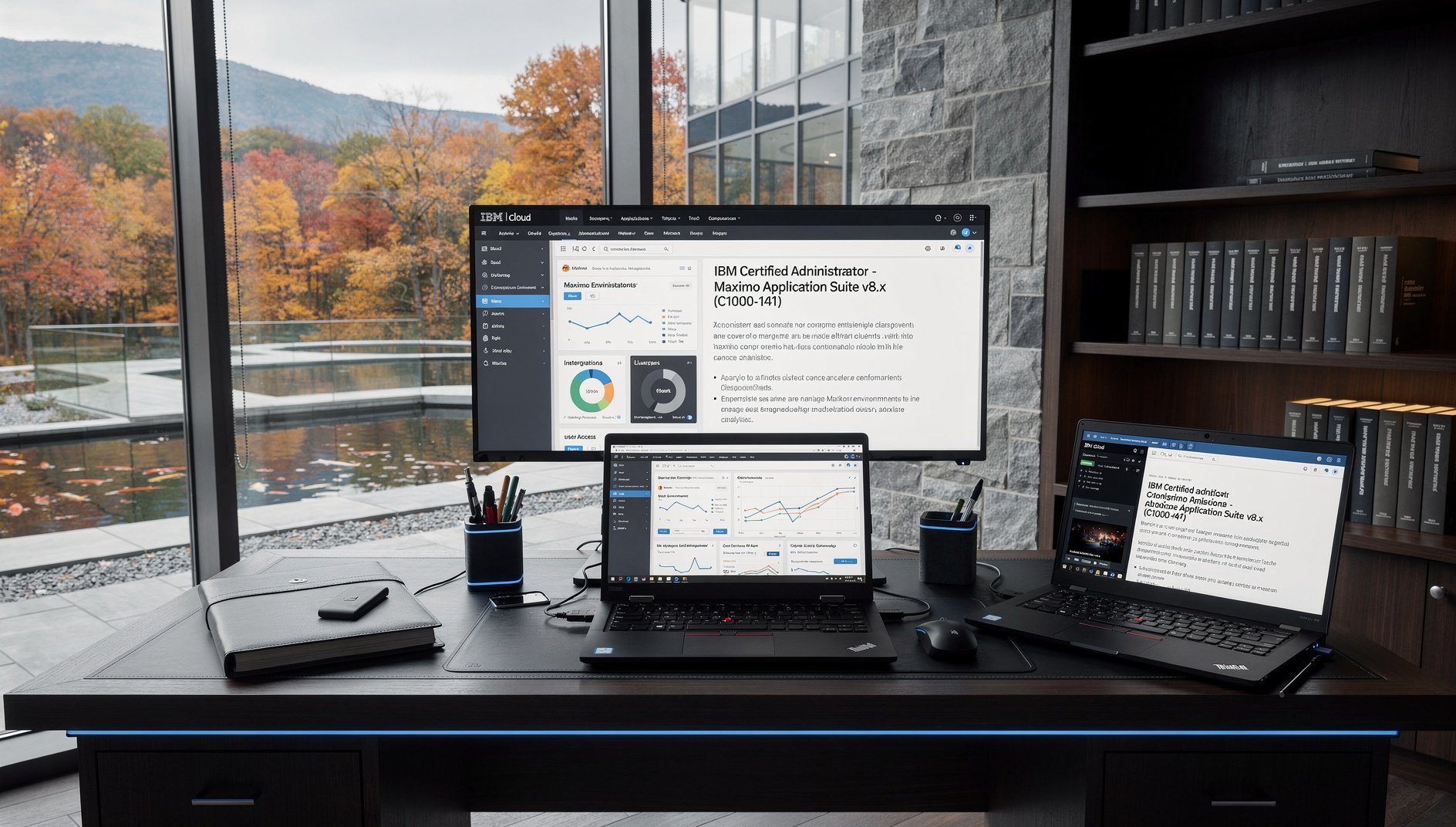
IBM Certified Administrator - Maximo Application Suite v8.x (C1000-141) teaches candidates to administer, secure, configure, integrate, and manage Maximo environments, applying analysis and strategy to ensure optimal performance and compliance.
Who Should Take This
It is intended for IT professionals who serve as Maximo system administrators, security engineers, or integration specialists with at least two years of experience in enterprise asset management. These learners aim to validate their expertise, expand their strategic capabilities, and qualify for IBM’s recognized credential to advance their careers.
What's Covered
1Domain 1: System Administration
2Domain 2: Security Administration
3Domain 3: Configuration Management
4Domain 4: Integration Administration
5Domain 5: Environment Management
6Domain 6: Operational Support
What's Included in AccelaStudy® AI
Course Outline
1Domain 1: System Administration 3 topics
Server Management
- Implement Maximo application server administration with JVM tuning, thread pool sizing, and session management.
- Configure application server clustering with load balancing, session replication, and failover.
- Analyze server performance metrics to identify CPU, memory, and I/O bottlenecks.
- Design server architecture for Maximo with horizontal scaling and resource optimization.
Database Administration
- Implement database maintenance including index rebuilding, statistics updates, and log management.
- Configure database backup schedules with full, incremental, and transaction log strategies.
- Analyze database query performance to identify slow queries and recommend indexing improvements.
Cron Tasks
- Implement cron task configuration with scheduling parameters, instance management, and monitoring.
- Configure custom cron tasks for automated data processing, notifications, and housekeeping.
- Analyze cron task execution history to diagnose failures and optimize scheduling.
2Domain 2: Security Administration 3 topics
User and Group Management
- Implement security group configuration with application access, site assignments, and labor associations.
- Configure security group data restrictions with object-level, attribute-level, and collection-level conditional access rules.
- Analyze security audit data to identify unauthorized access and overprivileged accounts.
- Design security group hierarchies with independent and nested groups for role-based access.
Authentication Integration
- Implement LDAP synchronization with cron tasks for user and group provisioning.
- Configure SSO integration using SAML or OIDC with identity provider federation.
- Analyze authentication failures to troubleshoot SSO configuration and credential problems.
Electronic Signatures
- Implement electronic signature configuration for regulatory compliance with authentication requirements and audit documentation.
- Configure audit trail management with record-level change tracking and approvals.
- Analyze compliance requirements to map controls to FDA 21 CFR Part 11 or SOX standards.
3Domain 3: Configuration Management 3 topics
System Properties
- Implement system property configuration for application behavior and feature toggles.
- Configure application-level properties with live refresh capability for runtime behavior adjustments without server restart.
- Analyze property dependencies to plan changes with minimal service disruption.
Domain Configuration
- Implement domains and classifications with synonyms, cross-references, and hierarchical values.
- Configure conditional domains with filtering rules based on object attributes.
- Analyze domain usage to standardize value lists and eliminate redundant classifications.
- Design domain governance for maintaining data consistency across Maximo organizations.
Communication Templates
- Implement communication templates for automated notifications, escalation alerts, and workflow-triggered messages with variable substitution.
- Configure email listener for inbound message processing with service request creation.
- Analyze communication delivery failures to troubleshoot SMTP and template rendering issues.
4Domain 4: Integration Administration 3 topics
Integration Framework
- Implement integration endpoint configuration with authentication, error handling, and retries.
- Configure message tracking and error queue management for failed transaction resolution.
- Analyze integration message flow to diagnose data mapping errors and transformation failures.
API and Automation
- Implement REST API administration with resource registration, auth keys, and rate limiting.
- Configure automation script deployment with library management and cross-environment promotion.
- Analyze API usage patterns to optimize endpoint performance and manage consumer access.
- Design integration governance frameworks with API versioning, consumer documentation, and deprecation notification procedures.
External Systems
- Implement ERP integration with SAP or Oracle using enterprise services and publish channels.
- Configure IoT platform connectivity for asset sensor data ingestion and condition monitoring.
- Analyze integration performance to identify throughput constraints and optimize batch processing.
5Domain 5: Environment Management 3 topics
Multi-Environment Operations
- Implement environment refresh with database cloning, configuration migration, and data masking.
- Configure migration manager for promoting changes across development, test, and production.
- Analyze environment drift to identify configuration differences and enforce consistency.
Patch and Upgrade
- Implement fix pack installation with pre-upgrade verification and rollback planning.
- Configure MAS operator updates with controlled rollout across managed instances.
- Analyze upgrade impact to evaluate customization compatibility and regression risk.
- Design upgrade strategies with phased rollouts, canary deployments, and regression testing.
Performance
- Implement performance monitoring with application metrics, database stats, and user concurrency.
- Configure performance optimization through query tuning, index management, and caching.
- Analyze capacity trends to forecast resource requirements and plan scaling.
6Domain 6: Operational Support 3 topics
Incident Management
- Implement incident response procedures for outages with diagnostic data collection and triage.
- Configure health monitoring with automated checks, threshold alerts, and escalation notifications.
- Analyze system error patterns to identify root causes and implement preventive measures.
Logging and Diagnostics
- Implement logging configuration with application, integration, and security log management.
- Configure log aggregation using ELK stack or Splunk for centralized troubleshooting.
- Analyze log correlation across application, database, and infrastructure for issue resolution.
- Design operational runbook procedures for common tasks and emergency responses.
Data Management
- Implement data archival strategies using Maximo history tables and external archives.
- Configure data purge policies for transactional records with retention compliance.
- Analyze data growth trends to plan storage capacity and optimize database performance.
Scope
Included Topics
- All domains of IBM Maximo Administrator (C1000-141).
- Maximo Application Suite v8.x: system, security, integration administration.
- Configuration, environment management, operational support.
- Performance tuning, upgrade procedures, and incident management.
Not Covered
- Maximo implementation and initial deployment (C1000-132).
- Asset management business processes (end-user level).
- Non-IBM EAM platforms.
- Custom Java development for Maximo extensions.
Official Exam Page
Learn more at IBM
C1000-141 is coming soon
Adaptive learning that maps your knowledge and closes your gaps.
Create Free Account to Be Notified