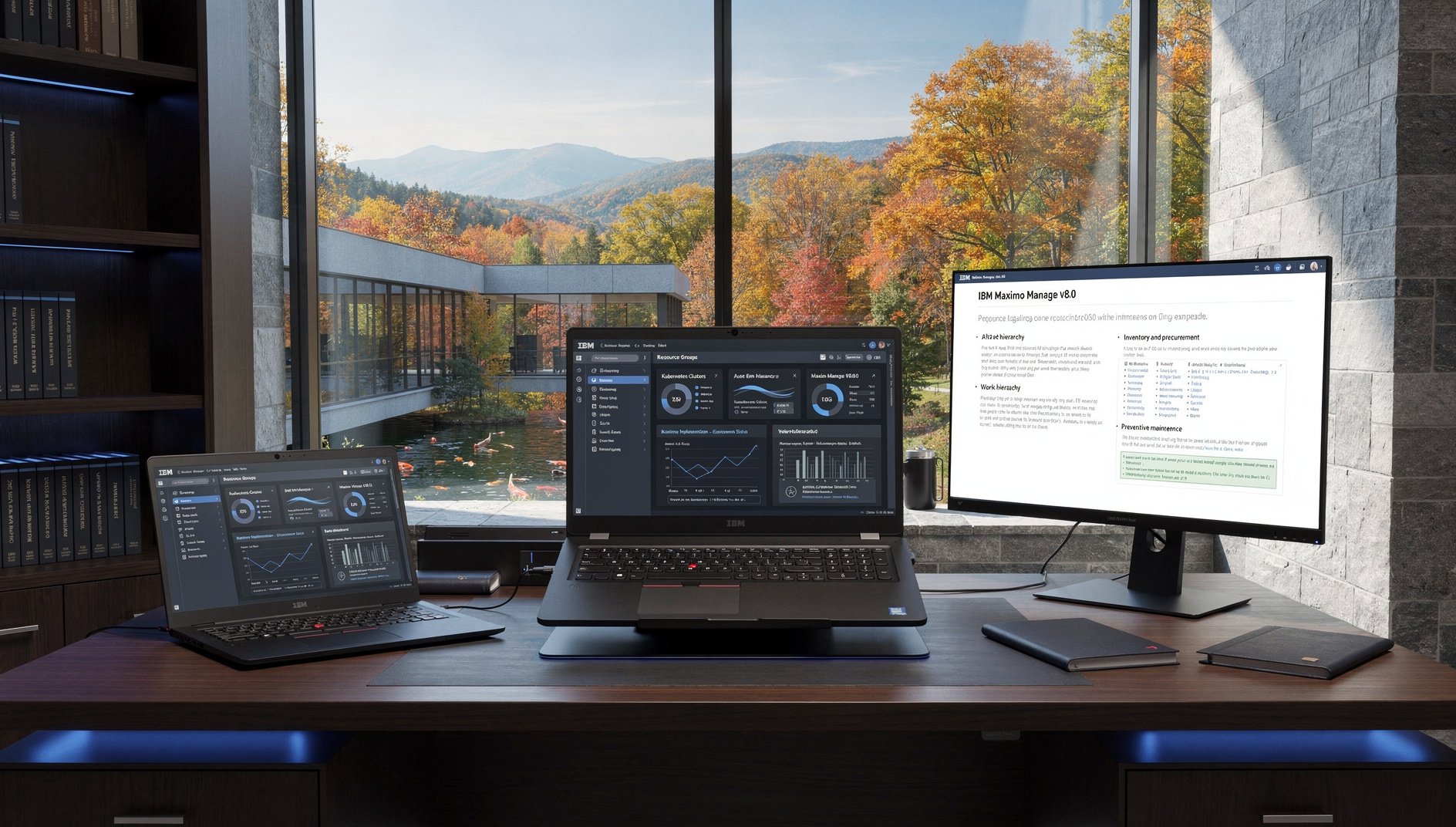
This course is in active development. Preview the scope below and create a free account to be notified the moment it goes live.
Maximo Implementation
The course teaches candidates how to configure, deploy, and manage IBM Maximo Manage v8.0 within the Maximo Application Suite, covering platform architecture, asset hierarchy, work planning, inventory, procurement, and preventive maintenance.
Who Should Take This
It is intended for IT professionals, system integrators, and asset managers who have at least one year of experience with IBM Maximo or similar EAM solutions and seek to validate their ability to implement and support Maximo Manage v8.0. Learners aim to achieve associate‑level certification and advance their careers in enterprise asset management.
What's Covered
1Domain 1: Maximo Application Suite (MAS) Platform and Architecture
2Domain 2: Asset Management and Location Hierarchy
3Domain 3: Work Management and Job Planning
4Domain 4: Inventory and Procurement Management
5Domain 5: Preventive Maintenance and Scheduling
6Domain 6: System Configuration and Security
What's Included in AccelaStudy® AI
Course Outline
1Domain 1: Maximo Application Suite (MAS) Platform and Architecture 2 topics
MAS Platform Fundamentals
- Identify the core components of IBM Maximo Application Suite (MAS) v8.0 including Manage, Health, Monitor, and Predict applications
- Describe the OpenShift container platform architecture and how MAS integrates with Red Hat OpenShift clusters
- Explain the MongoDB database requirements and configuration for MAS deployment including replica sets and authentication
- Apply MAS workspace creation procedures including licensing, database connections, and application activation workflows
- Analyze MAS deployment topology options for single-node versus multi-node OpenShift environments and their performance implications
Maximo Manage Application Architecture
- Identify Maximo Manage v8.0 application tiers including presentation, business logic, and data layers within the MAS architecture
- Configure MAS system properties including cron task settings, email notifications, and integration endpoints through the MAS admin console
- Apply Maximo Manage database schema understanding for key tables like ASSET, WORKORDER, LOCATIONS, and INVENTORY objects
- Evaluate system performance metrics and logging configurations for Maximo Manage applications running on OpenShift pods
- Analyze integration patterns between Maximo Manage and external systems using REST APIs, web services, and MQ messaging
2Domain 2: Asset Management and Location Hierarchy 2 topics
Asset Creation and Configuration
- Create asset records in Maximo Manage including asset number, description, type, and parent-child relationships
- Configure asset specifications, classifications, and attributes using the Classification application for standardized asset data
- Apply asset status management including status changes, condition monitoring, and lifecycle tracking from planning to decommission
- Establish asset-location relationships and configure rotating assets with meter readings and calibration schedules
- Analyze asset hierarchy structures and evaluate parent-child dependencies for maintenance planning and cost tracking
Location Hierarchy and Management
- Define location hierarchy structures in Maximo including sites, operating locations, and system locations for organizational alignment
- Configure location records with geographic coordinates, operating schedules, and maintenance windows for effective resource planning
- Apply location-based security and data restriction rules to control user access to specific sites and locations
- Implement location meters and measurement points for tracking usage, performance, and environmental conditions
- Evaluate location utilization reports and analyze space management efficiency for operational optimization
3Domain 3: Work Management and Job Planning 3 topics
Work Order Management
- Create work orders in Maximo including work type, priority, asset assignment, and required completion dates
- Configure work order status management and approval workflows including WAPPR, APPROVED, INPRG, and COMP status transitions
- Apply work order planning processes including labor estimates, material requirements, and service assignments
- Implement work order tracking with actual labor hours, material usage, and cost reporting for project accounting
- Analyze work order performance metrics including schedule compliance, cost variance, and resource utilization trends
Job Plans and Templates
- Identify job plan components including task sequences, labor requirements, material lists, and safety procedures
- Create standardized job plans with task libraries, estimated durations, and required craft assignments for repetitive maintenance
- Configure job plan templates with standard operating procedures, safety protocols, and quality checkpoints
- Apply job plan inheritance to work orders and evaluate template effectiveness for maintenance standardization
- Analyze job plan performance data to optimize task sequences, resource allocation, and completion times
Safety Plans and Compliance
- Define safety plan requirements including hazard identification, personal protective equipment, and lockout procedures
- Create safety plans with risk assessments, mitigation procedures, and required safety training certifications
- Configure safety plan associations with work orders, job plans, and specific asset types for compliance management
- Apply safety checklist validation and approval workflows before work authorization and execution
- Evaluate safety incident tracking and analyze compliance metrics for continuous safety improvement programs
4Domain 4: Inventory and Procurement Management 3 topics
Inventory Control and Storerooms
- Configure storeroom setup including storeroom types, bin locations, and inventory control policies
- Create inventory items with item master data including descriptions, unit of measure, and ABC classification
- Apply inventory transactions including receipts, issues, transfers, and physical count adjustments
- Implement reorder point calculations, economic order quantities, and automated replenishment rules
- Analyze inventory turnover rates, carrying costs, and stock-out frequency to optimize inventory levels
Purchase Orders and Procurement
- Identify purchase order types including standard POs, blanket agreements, and service contracts
- Create purchase orders with vendor selection, line items, delivery schedules, and terms and conditions
- Configure purchase order approval workflows including spending limits, GL account validation, and management authorization
- Apply purchase order receiving processes including partial receipts, over-receipts, and inspection requirements
- Evaluate vendor performance metrics including delivery timeliness, quality ratings, and cost competitiveness
Material Planning and Forecasting
- Apply material requirements planning (MRP) calculations for work order material needs and lead time planning
- Configure material reservation processes for planned work orders and preventive maintenance schedules
- Implement spare parts analysis including criticality assessment, failure analysis, and recommended stock levels
- Analyze material usage patterns and forecast demand for strategic procurement planning
5Domain 5: Preventive Maintenance and Scheduling 2 topics
PM Schedule Configuration
- Define preventive maintenance (PM) schedule types including time-based, meter-based, and condition-based triggers
- Create PM records with frequency settings, lead time requirements, and seasonal adjustments
- Configure PM generation rules including advance scheduling, work order creation, and resource allocation
- Apply PM optimization techniques including schedule coordination, resource leveling, and maintenance windows
- Analyze PM effectiveness metrics including schedule adherence, equipment reliability, and maintenance cost trends
Maintenance Planning and Execution
- Implement maintenance planning processes including work order prioritization, resource scheduling, and material coordination
- Configure maintenance calendars with shutdown periods, available work hours, and crew scheduling constraints
- Apply condition monitoring integration for predictive maintenance triggers and failure analysis
- Evaluate maintenance backlog management and analyze work order aging for capacity planning
6Domain 6: System Configuration and Security 3 topics
Organizations and Sites Setup
- Configure organization records with company codes, currencies, and default settings for multi-tenant environments
- Create site records with organizational assignments, calendars, and operational parameters
- Apply cross-site data sharing rules and configure inter-organizational transfer processes
- Analyze organizational reporting structures and evaluate site performance across multiple business units
User Management and Security
- Create user accounts in MAS with person records, login credentials, and default site assignments
- Configure security groups with application access rights, data restrictions, and functional permissions
- Apply role-based access control (RBAC) with Maximo security applications and conditional expression rules
- Implement LDAP integration for enterprise authentication and single sign-on (SSO) configuration
- Analyze user access patterns and evaluate security compliance for audit and governance requirements
System Administration and Automation
- Configure cron task definitions for automated system processes including escalations, workflow actions, and data cleanup
- Apply system property configurations for email settings, logging levels, and performance tuning parameters
- Implement automated workflows for approval processes, notifications, and business rule enforcement
- Evaluate system performance monitoring and analyze database optimization opportunities for scalability
Scope
Included Topics
- All domains of C1000-132 IBM Certified - Maximo Manage v8.0 Implementation: Maximo Manage v8.0 implementation: architecture on OpenShift, MAS platform; asset management, locations, work orders, PM schedules; inventory and procurement, storerooms, purchase orders; work managem.
- Exam-specific technical content covering ent, job plans, safety plans; system configuration, organizations, sites, cron tasks; security, users, groups, application security..
Not Covered
- Topics outside the C1000-132 exam scope and other certification levels.
- Current pricing, promotional offers, and vendor-specific values that change over time.
- Implementation details for competing vendor products and platforms.
Official Exam Page
Learn more at IBM
C1000-132 is coming soon
Adaptive learning that maps your knowledge and closes your gaps.
Create Free Account to Be Notified