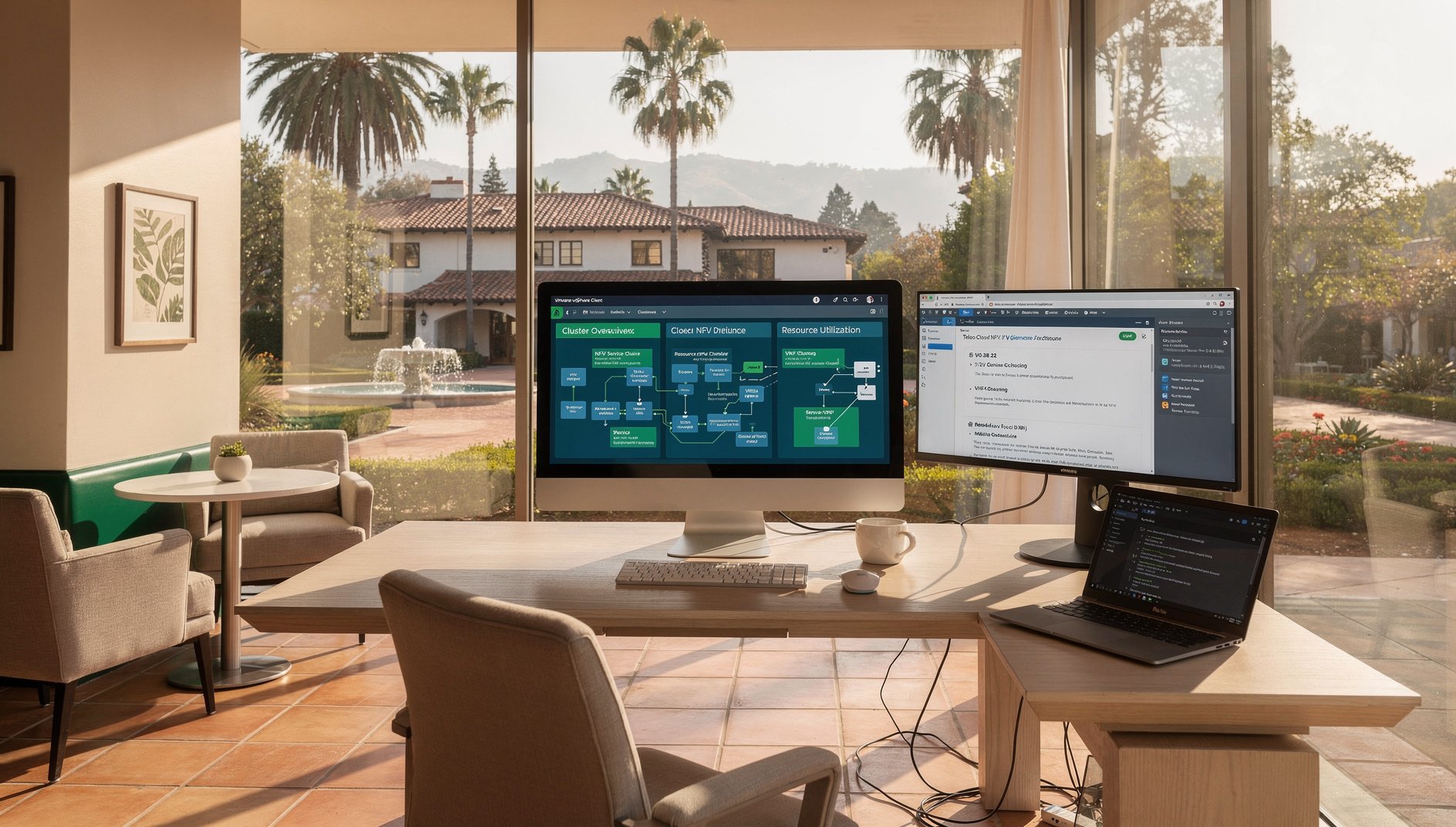
This course is in active development. Preview the scope below and create a free account to be notified the moment it goes live.
TelcoNFV Specialist
The 5V0-38.22 course teaches the design, deployment, and optimization of NFV solutions on VMware Telco Cloud, covering architecture, VNF onboarding, service chaining, performance tuning, and multi‑site orchestration.
Who Should Take This
Network engineers, system architects, and cloud operations professionals with at least three years of experience in virtualized networking should enroll. They aim to validate expertise in NFV lifecycle management, enhance strategic planning for telco cloud deployments, and position themselves for senior specialist roles.
What's Covered
1Domain 1: NFV Architecture
2Domain 2: VNF Deployment
3Domain 3: Service Chaining
4Domain 4: Performance
5Domain 5: Multi-Site
6Domain 6: Automation
7Domain 7: Troubleshooting
What's Included in AccelaStudy® AI
Course Outline
1Domain 1: NFV Architecture 2 topics
ETSI MANO
- Apply ETSI MANO framework components including NFVO, VNFM, VIM, and their interactions configuration and operational procedures for enterprise VMware environments.
- Apply ETSI MANO framework components including NFVO, VNFM, VIM, and their interactions best practices including deployment standards and integration with related components.
- Analyze ETSI MANO framework components including NFVO, VNFM, VIM, and their interactions configuration and data to identify issues, performance bottlenecks, and optimization opportunities.
- Analyze ETSI MANO framework components including NFVO, VNFM, VIM, and their interactions tradeoffs between different implementation approaches evaluating complexity, cost, and operational impact.
- Design a ETSI MANO framework components including NFVO, VNFM, VIM, and their interactions strategy that satisfies enterprise requirements for scalability, performance, security, and governance.
NFV Infrastructure
- Apply NFV infrastructure design including compute, storage, networking, and acceleration technologies techniques for complex scenarios requiring multi-component coordination and integration.
- Apply NFV infrastructure design including compute, storage, networking, and acceleration technologies integration with monitoring, automation, and third-party systems for unified management.
- Analyze NFV infrastructure design including compute, storage, networking, and acceleration technologies failures and degradation using diagnostic tools, logs, and metrics to determine root causes.
- Analyze the operational impact of NFV infrastructure design including compute, storage, networking, and acceleration technologies changes on dependent services and infrastructure stability.
- Design comprehensive NFV infrastructure design including compute, storage, networking, and acceleration technologies procedures including automation, monitoring, escalation, and documentation.
2Domain 2: VNF Deployment 2 topics
VNF Onboarding
- Apply VNF package onboarding including TOSCA descriptors, images, and configuration templates configuration and operational procedures for enterprise VMware environments.
- Apply VNF package onboarding including TOSCA descriptors, images, and configuration templates best practices including deployment standards and integration with related components.
- Analyze VNF package onboarding including TOSCA descriptors, images, and configuration templates configuration and data to identify issues, performance bottlenecks, and optimization opportunities.
- Analyze VNF package onboarding including TOSCA descriptors, images, and configuration templates tradeoffs between different implementation approaches evaluating complexity, cost, and operational impact.
- Design a VNF package onboarding including TOSCA descriptors, images, and configuration templates strategy that satisfies enterprise requirements for scalability, performance, security, and governance.
VNF Lifecycle
- Apply VNF lifecycle operations including instantiation, configuration, scaling, and termination techniques for complex scenarios requiring multi-component coordination and integration.
- Apply VNF lifecycle operations including instantiation, configuration, scaling, and termination integration with monitoring, automation, and third-party systems for unified management.
- Analyze VNF lifecycle operations including instantiation, configuration, scaling, and termination failures and degradation using diagnostic tools, logs, and metrics to determine root causes.
- Analyze the operational impact of VNF lifecycle operations including instantiation, configuration, scaling, and termination changes on dependent services and infrastructure stability.
- Design comprehensive VNF lifecycle operations including instantiation, configuration, scaling, and termination procedures including automation, monitoring, escalation, and documentation.
3Domain 3: Service Chaining 2 topics
Network Services
- Apply network service design with VNF forwarding graphs and service function chaining configuration and operational procedures for enterprise VMware environments.
- Apply network service design with VNF forwarding graphs and service function chaining best practices including deployment standards and integration with related components.
- Analyze network service design with VNF forwarding graphs and service function chaining configuration and data to identify issues, performance bottlenecks, and optimization opportunities.
- Analyze network service design with VNF forwarding graphs and service function chaining tradeoffs between different implementation approaches evaluating complexity, cost, and operational impact.
- Design a network service design with VNF forwarding graphs and service function chaining strategy that satisfies enterprise requirements for scalability, performance, security, and governance.
Traffic Steering
- Apply traffic steering configuration for service chains using NSX and physical network integration techniques for complex scenarios requiring multi-component coordination and integration.
- Apply traffic steering configuration for service chains using NSX and physical network integration integration with monitoring, automation, and third-party systems for unified management.
- Analyze traffic steering configuration for service chains using NSX and physical network integration failures and degradation using diagnostic tools, logs, and metrics to determine root causes.
- Analyze the operational impact of traffic steering configuration for service chains using NSX and physical network integration changes on dependent services and infrastructure stability.
- Design comprehensive traffic steering configuration for service chains using NSX and physical network integration procedures including automation, monitoring, escalation, and documentation.
4Domain 4: Performance 2 topics
Optimization
- Apply NFV performance optimization including SR-IOV, DPDK, NUMA-aware placement, and huge pages configuration and operational procedures for enterprise VMware environments.
- Apply NFV performance optimization including SR-IOV, DPDK, NUMA-aware placement, and huge pages best practices including deployment standards and integration with related components.
- Analyze NFV performance optimization including SR-IOV, DPDK, NUMA-aware placement, and huge pages configuration and data to identify issues, performance bottlenecks, and optimization opportunities.
- Analyze NFV performance optimization including SR-IOV, DPDK, NUMA-aware placement, and huge pages tradeoffs between different implementation approaches evaluating complexity, cost, and operational impact.
- Design a NFV performance optimization including SR-IOV, DPDK, NUMA-aware placement, and huge pages strategy that satisfies enterprise requirements for scalability, performance, security, and governance.
Benchmarking
- Apply NFV performance benchmarking for throughput, latency, and packet processing metrics techniques for complex scenarios requiring multi-component coordination and integration.
- Apply NFV performance benchmarking for throughput, latency, and packet processing metrics integration with monitoring, automation, and third-party systems for unified management.
- Analyze NFV performance benchmarking for throughput, latency, and packet processing metrics failures and degradation using diagnostic tools, logs, and metrics to determine root causes.
- Analyze the operational impact of NFV performance benchmarking for throughput, latency, and packet processing metrics changes on dependent services and infrastructure stability.
- Design comprehensive NFV performance benchmarking for throughput, latency, and packet processing metrics procedures including automation, monitoring, escalation, and documentation.
5Domain 5: Multi-Site 2 topics
Distributed NFV
- Apply multi-site NFV deployment for geographically distributed telco infrastructure configuration and operational procedures for enterprise VMware environments.
- Apply multi-site NFV deployment for geographically distributed telco infrastructure best practices including deployment standards and integration with related components.
- Analyze multi-site NFV deployment for geographically distributed telco infrastructure configuration and data to identify issues, performance bottlenecks, and optimization opportunities.
- Analyze multi-site NFV deployment for geographically distributed telco infrastructure tradeoffs between different implementation approaches evaluating complexity, cost, and operational impact.
- Design a multi-site NFV deployment for geographically distributed telco infrastructure strategy that satisfies enterprise requirements for scalability, performance, security, and governance.
Edge NFV
- Apply edge NFV deployment for latency-sensitive applications at network edge locations techniques for complex scenarios requiring multi-component coordination and integration.
- Apply edge NFV deployment for latency-sensitive applications at network edge locations integration with monitoring, automation, and third-party systems for unified management.
- Analyze edge NFV deployment for latency-sensitive applications at network edge locations failures and degradation using diagnostic tools, logs, and metrics to determine root causes.
- Analyze the operational impact of edge NFV deployment for latency-sensitive applications at network edge locations changes on dependent services and infrastructure stability.
- Design comprehensive edge NFV deployment for latency-sensitive applications at network edge locations procedures including automation, monitoring, escalation, and documentation.
6Domain 6: Automation 2 topics
Orchestration
- Apply NFV orchestration automation using ETSI SOL005 APIs and intent-based management configuration and operational procedures for enterprise VMware environments.
- Apply NFV orchestration automation using ETSI SOL005 APIs and intent-based management best practices including deployment standards and integration with related components.
- Analyze NFV orchestration automation using ETSI SOL005 APIs and intent-based management configuration and data to identify issues, performance bottlenecks, and optimization opportunities.
- Analyze NFV orchestration automation using ETSI SOL005 APIs and intent-based management tradeoffs between different implementation approaches evaluating complexity, cost, and operational impact.
- Design a NFV orchestration automation using ETSI SOL005 APIs and intent-based management strategy that satisfies enterprise requirements for scalability, performance, security, and governance.
Day-2 Automation
- Apply day-2 NFV automation including auto-scaling, auto-healing, and configuration management techniques for complex scenarios requiring multi-component coordination and integration.
- Apply day-2 NFV automation including auto-scaling, auto-healing, and configuration management integration with monitoring, automation, and third-party systems for unified management.
- Analyze day-2 NFV automation including auto-scaling, auto-healing, and configuration management failures and degradation using diagnostic tools, logs, and metrics to determine root causes.
- Analyze the operational impact of day-2 NFV automation including auto-scaling, auto-healing, and configuration management changes on dependent services and infrastructure stability.
- Design comprehensive day-2 NFV automation including auto-scaling, auto-healing, and configuration management procedures including automation, monitoring, escalation, and documentation.
7Domain 7: Troubleshooting 2 topics
VNF Issues
- Apply VNF troubleshooting for deployment failures, connectivity issues, and performance degradation configuration and operational procedures for enterprise VMware environments.
- Apply VNF troubleshooting for deployment failures, connectivity issues, and performance degradation best practices including deployment standards and integration with related components.
- Analyze VNF troubleshooting for deployment failures, connectivity issues, and performance degradation configuration and data to identify issues, performance bottlenecks, and optimization opportunities.
- Analyze VNF troubleshooting for deployment failures, connectivity issues, and performance degradation tradeoffs between different implementation approaches evaluating complexity, cost, and operational impact.
- Design a VNF troubleshooting for deployment failures, connectivity issues, and performance degradation strategy that satisfies enterprise requirements for scalability, performance, security, and governance.
Infrastructure Issues
- Apply NFV infrastructure troubleshooting for host failures, network isolation, and resource contention techniques for complex scenarios requiring multi-component coordination and integration.
- Apply NFV infrastructure troubleshooting for host failures, network isolation, and resource contention integration with monitoring, automation, and third-party systems for unified management.
- Analyze NFV infrastructure troubleshooting for host failures, network isolation, and resource contention failures and degradation using diagnostic tools, logs, and metrics to determine root causes.
- Analyze the operational impact of NFV infrastructure troubleshooting for host failures, network isolation, and resource contention changes on dependent services and infrastructure stability.
- Design comprehensive NFV infrastructure troubleshooting for host failures, network isolation, and resource contention procedures including automation, monitoring, escalation, and documentation.
Scope
Included Topics
- NFV architecture, ETSI MANO framework, VNF deployment, network service chaining, performance optimization, multi-site NFV, automation, and troubleshooting.
- Enterprise-level VMware technology knowledge for VMware Telco Cloud NFV Specialist.
Not Covered
- Implementation details beyond stated certification scope.
- Vendor-specific third-party configurations.
- Current pricing and partner program details.
Official Exam Page
Learn more at VMware/Broadcom
5V0-38.22 is coming soon
Adaptive learning that maps your knowledge and closes your gaps.
Create Free Account to Be Notified