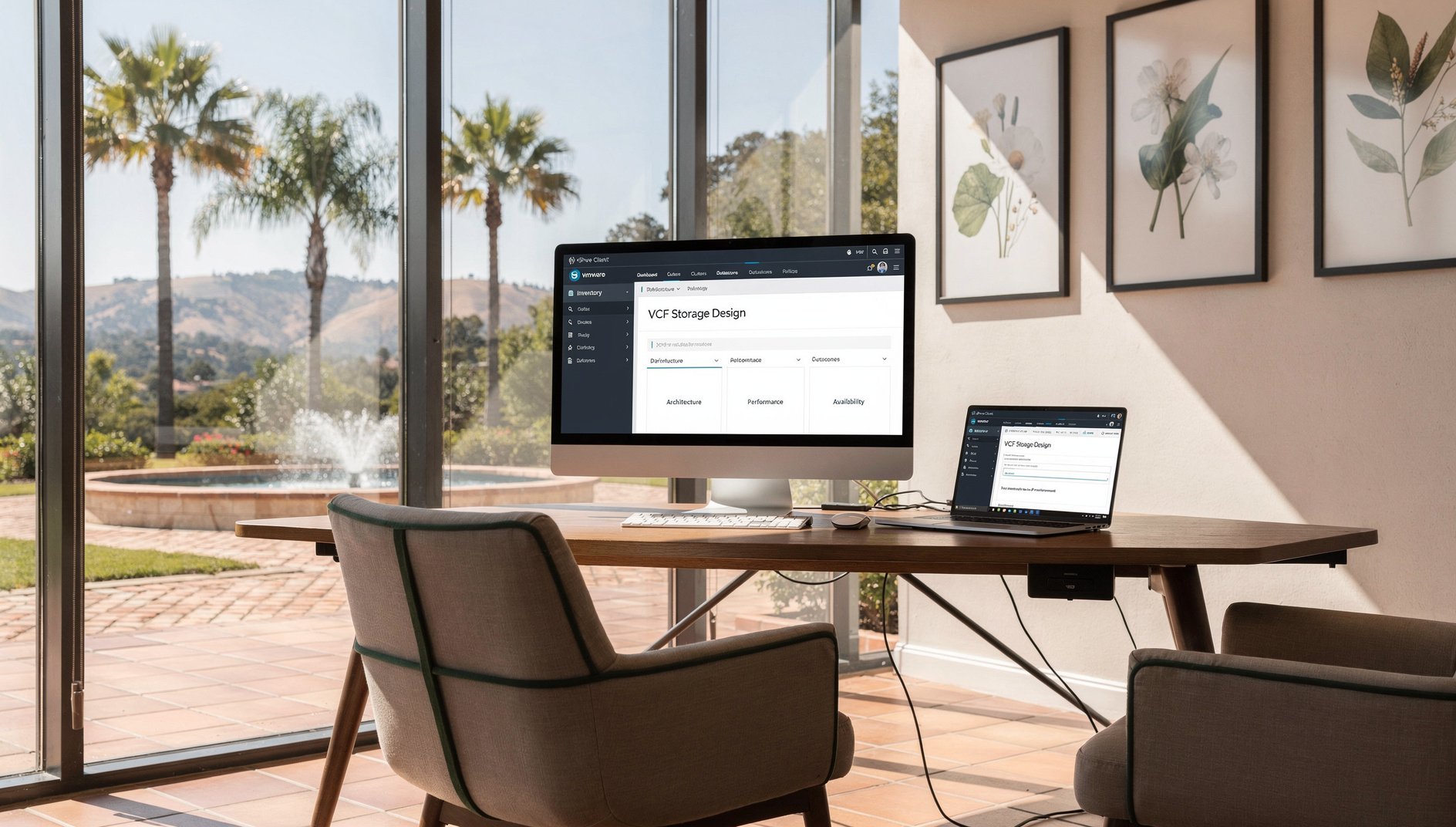
This course is in active development. Preview the scope below and create a free account to be notified the moment it goes live.
VCF Storage Design
The course equips VMware professionals with advanced skills to design, analyze, and optimize storage for VCF 9.0, covering architecture, policies, performance, availability, and encryption in enterprise environments.
Who Should Take This
It is intended for senior VMware architects, engineers, and consultants who have at least three years of experience designing and managing virtualized infrastructure. These professionals seek to validate their expertise in VCF 9.0 storage design and to lead strategic storage initiatives across complex, multi‑cloud environments.
What's Covered
1Domain 1: Storage Architecture
2Domain 2: Policy Design
3Domain 3: Performance Design
4Domain 4: Availability Design
5Domain 5: Encryption Design
6Domain 6: Capacity Planning
7Domain 7: Integration Design
What's Included in AccelaStudy® AI
Course Outline
1Domain 1: Storage Architecture 2 topics
vSAN Design
- Apply vSAN architecture design including ESA vs OSA selection, disk configuration, and cluster layout configuration and operational procedures for enterprise VMware environments.
- Apply vSAN architecture design including ESA vs OSA selection, disk configuration, and cluster layout best practices including deployment standards and integration with related components.
- Analyze vSAN architecture design including ESA vs OSA selection, disk configuration, and cluster layout configuration and data to identify issues, performance bottlenecks, and optimization opportunities.
- Analyze vSAN architecture design including ESA vs OSA selection, disk configuration, and cluster layout tradeoffs between different implementation approaches evaluating complexity, cost, and operational impact.
- Design a vSAN architecture design including ESA vs OSA selection, disk configuration, and cluster layout strategy that satisfies enterprise requirements for scalability, performance, security, and governance.
Supplemental Storage
- Apply supplemental storage integration design for workloads requiring external SAN, NAS, or vVol techniques for complex scenarios requiring multi-component coordination and integration.
- Apply supplemental storage integration design for workloads requiring external SAN, NAS, or vVol integration with monitoring, automation, and third-party systems for unified management.
- Analyze supplemental storage integration design for workloads requiring external SAN, NAS, or vVol failures and degradation using diagnostic tools, logs, and metrics to determine root causes.
- Analyze the operational impact of supplemental storage integration design for workloads requiring external SAN, NAS, or vVol changes on dependent services and infrastructure stability.
- Design comprehensive supplemental storage integration design for workloads requiring external SAN, NAS, or vVol procedures including automation, monitoring, escalation, and documentation.
2Domain 2: Policy Design 2 topics
SPBM Architecture
- Apply storage policy-based management design mapping workload requirements to availability and performance tiers configuration and operational procedures for enterprise VMware environments.
- Apply storage policy-based management design mapping workload requirements to availability and performance tiers best practices including deployment standards and integration with related components.
- Analyze storage policy-based management design mapping workload requirements to availability and performance tiers configuration and data to identify issues, performance bottlenecks, and optimization opportunities.
- Analyze storage policy-based management design mapping workload requirements to availability and performance tiers tradeoffs between different implementation approaches evaluating complexity, cost, and operational impact.
- Design a storage policy-based management design mapping workload requirements to availability and performance tiers strategy that satisfies enterprise requirements for scalability, performance, security, and governance.
Compliance Management
- Apply storage compliance monitoring design with policy drift detection and automated remediation techniques for complex scenarios requiring multi-component coordination and integration.
- Apply storage compliance monitoring design with policy drift detection and automated remediation integration with monitoring, automation, and third-party systems for unified management.
- Analyze storage compliance monitoring design with policy drift detection and automated remediation failures and degradation using diagnostic tools, logs, and metrics to determine root causes.
- Analyze the operational impact of storage compliance monitoring design with policy drift detection and automated remediation changes on dependent services and infrastructure stability.
- Design comprehensive storage compliance monitoring design with policy drift detection and automated remediation procedures including automation, monitoring, escalation, and documentation.
3Domain 3: Performance Design 2 topics
IOPS and Throughput
- Apply storage performance design including IOPS modeling, throughput sizing, and latency targets configuration and operational procedures for enterprise VMware environments.
- Apply storage performance design including IOPS modeling, throughput sizing, and latency targets best practices including deployment standards and integration with related components.
- Analyze storage performance design including IOPS modeling, throughput sizing, and latency targets configuration and data to identify issues, performance bottlenecks, and optimization opportunities.
- Analyze storage performance design including IOPS modeling, throughput sizing, and latency targets tradeoffs between different implementation approaches evaluating complexity, cost, and operational impact.
- Design a storage performance design including IOPS modeling, throughput sizing, and latency targets strategy that satisfies enterprise requirements for scalability, performance, security, and governance.
Cache and Tiering
- Apply cache tier design for vSAN including write buffer sizing and read cache optimization techniques for complex scenarios requiring multi-component coordination and integration.
- Apply cache tier design for vSAN including write buffer sizing and read cache optimization integration with monitoring, automation, and third-party systems for unified management.
- Analyze cache tier design for vSAN including write buffer sizing and read cache optimization failures and degradation using diagnostic tools, logs, and metrics to determine root causes.
- Analyze the operational impact of cache tier design for vSAN including write buffer sizing and read cache optimization changes on dependent services and infrastructure stability.
- Design comprehensive cache tier design for vSAN including write buffer sizing and read cache optimization procedures including automation, monitoring, escalation, and documentation.
4Domain 4: Availability Design 2 topics
Fault Domain Layout
- Apply fault domain architecture design including rack-aware placement and stretched cluster configuration configuration and operational procedures for enterprise VMware environments.
- Apply fault domain architecture design including rack-aware placement and stretched cluster configuration best practices including deployment standards and integration with related components.
- Analyze fault domain architecture design including rack-aware placement and stretched cluster configuration configuration and data to identify issues, performance bottlenecks, and optimization opportunities.
- Analyze fault domain architecture design including rack-aware placement and stretched cluster configuration tradeoffs between different implementation approaches evaluating complexity, cost, and operational impact.
- Design a fault domain architecture design including rack-aware placement and stretched cluster configuration strategy that satisfies enterprise requirements for scalability, performance, security, and governance.
Data Protection
- Apply data protection design including snapshots, replication, and backup integration with vSAN techniques for complex scenarios requiring multi-component coordination and integration.
- Apply data protection design including snapshots, replication, and backup integration with vSAN integration with monitoring, automation, and third-party systems for unified management.
- Analyze data protection design including snapshots, replication, and backup integration with vSAN failures and degradation using diagnostic tools, logs, and metrics to determine root causes.
- Analyze the operational impact of data protection design including snapshots, replication, and backup integration with vSAN changes on dependent services and infrastructure stability.
- Design comprehensive data protection design including snapshots, replication, and backup integration with vSAN procedures including automation, monitoring, escalation, and documentation.
5Domain 5: Encryption Design 2 topics
Data-at-Rest Encryption
- Apply vSAN and VM encryption design including KMS architecture, key rotation, and compliance requirements configuration and operational procedures for enterprise VMware environments.
- Apply vSAN and VM encryption design including KMS architecture, key rotation, and compliance requirements best practices including deployment standards and integration with related components.
- Analyze vSAN and VM encryption design including KMS architecture, key rotation, and compliance requirements configuration and data to identify issues, performance bottlenecks, and optimization opportunities.
- Analyze vSAN and VM encryption design including KMS architecture, key rotation, and compliance requirements tradeoffs between different implementation approaches evaluating complexity, cost, and operational impact.
- Design a vSAN and VM encryption design including KMS architecture, key rotation, and compliance requirements strategy that satisfies enterprise requirements for scalability, performance, security, and governance.
Data-in-Transit
- Apply data-in-transit encryption design for vSAN cluster communication and vMotion traffic techniques for complex scenarios requiring multi-component coordination and integration.
- Apply data-in-transit encryption design for vSAN cluster communication and vMotion traffic integration with monitoring, automation, and third-party systems for unified management.
- Analyze data-in-transit encryption design for vSAN cluster communication and vMotion traffic failures and degradation using diagnostic tools, logs, and metrics to determine root causes.
- Analyze the operational impact of data-in-transit encryption design for vSAN cluster communication and vMotion traffic changes on dependent services and infrastructure stability.
- Design comprehensive data-in-transit encryption design for vSAN cluster communication and vMotion traffic procedures including automation, monitoring, escalation, and documentation.
6Domain 6: Capacity Planning 2 topics
Sizing Methodology
- Apply storage capacity planning methodology including raw-to-usable calculations and growth projections configuration and operational procedures for enterprise VMware environments.
- Apply storage capacity planning methodology including raw-to-usable calculations and growth projections best practices including deployment standards and integration with related components.
- Analyze storage capacity planning methodology including raw-to-usable calculations and growth projections configuration and data to identify issues, performance bottlenecks, and optimization opportunities.
- Analyze storage capacity planning methodology including raw-to-usable calculations and growth projections tradeoffs between different implementation approaches evaluating complexity, cost, and operational impact.
- Design a storage capacity planning methodology including raw-to-usable calculations and growth projections strategy that satisfies enterprise requirements for scalability, performance, security, and governance.
Lifecycle Planning
- Apply storage lifecycle planning including hardware refresh, technology migration, and end-of-life management techniques for complex scenarios requiring multi-component coordination and integration.
- Apply storage lifecycle planning including hardware refresh, technology migration, and end-of-life management integration with monitoring, automation, and third-party systems for unified management.
- Analyze storage lifecycle planning including hardware refresh, technology migration, and end-of-life management failures and degradation using diagnostic tools, logs, and metrics to determine root causes.
- Analyze the operational impact of storage lifecycle planning including hardware refresh, technology migration, and end-of-life management changes on dependent services and infrastructure stability.
- Design comprehensive storage lifecycle planning including hardware refresh, technology migration, and end-of-life management procedures including automation, monitoring, escalation, and documentation.
7Domain 7: Integration Design 2 topics
VCF Integration
- Apply storage integration design within VCF workload domains including SDDC Manager automation configuration and operational procedures for enterprise VMware environments.
- Apply storage integration design within VCF workload domains including SDDC Manager automation best practices including deployment standards and integration with related components.
- Analyze storage integration design within VCF workload domains including SDDC Manager automation configuration and data to identify issues, performance bottlenecks, and optimization opportunities.
- Analyze storage integration design within VCF workload domains including SDDC Manager automation tradeoffs between different implementation approaches evaluating complexity, cost, and operational impact.
- Design a storage integration design within VCF workload domains including SDDC Manager automation strategy that satisfies enterprise requirements for scalability, performance, security, and governance.
Application Integration
- Apply application-aware storage design for databases, containers, and AI/ML workloads techniques for complex scenarios requiring multi-component coordination and integration.
- Apply application-aware storage design for databases, containers, and AI/ML workloads integration with monitoring, automation, and third-party systems for unified management.
- Analyze application-aware storage design for databases, containers, and AI/ML workloads failures and degradation using diagnostic tools, logs, and metrics to determine root causes.
- Analyze the operational impact of application-aware storage design for databases, containers, and AI/ML workloads changes on dependent services and infrastructure stability.
- Design comprehensive application-aware storage design for databases, containers, and AI/ML workloads procedures including automation, monitoring, escalation, and documentation.
Scope
Included Topics
- VCF storage architecture design including vSAN ESA/OSA selection, fault domain layout, storage policies, supplemental storage, data protection, encryption, and capacity planning.
- Enterprise-level VMware technology knowledge for VCF 9.0 Storage Design.
Not Covered
- Implementation details beyond stated certification scope.
- Vendor-specific third-party configurations.
- Current pricing and partner program details.
Official Exam Page
Learn more at VMware/Broadcom
3V0-24.25 is coming soon
Adaptive learning that maps your knowledge and closes your gaps.
Create Free Account to Be Notified